
Meal Planning for House Guests: Count the Meals That Matter
Make meal planning for house guests manageable with a meal-by-meal headcount, agreed preferences, flexible breakfasts, shared jobs, and one grocery list.
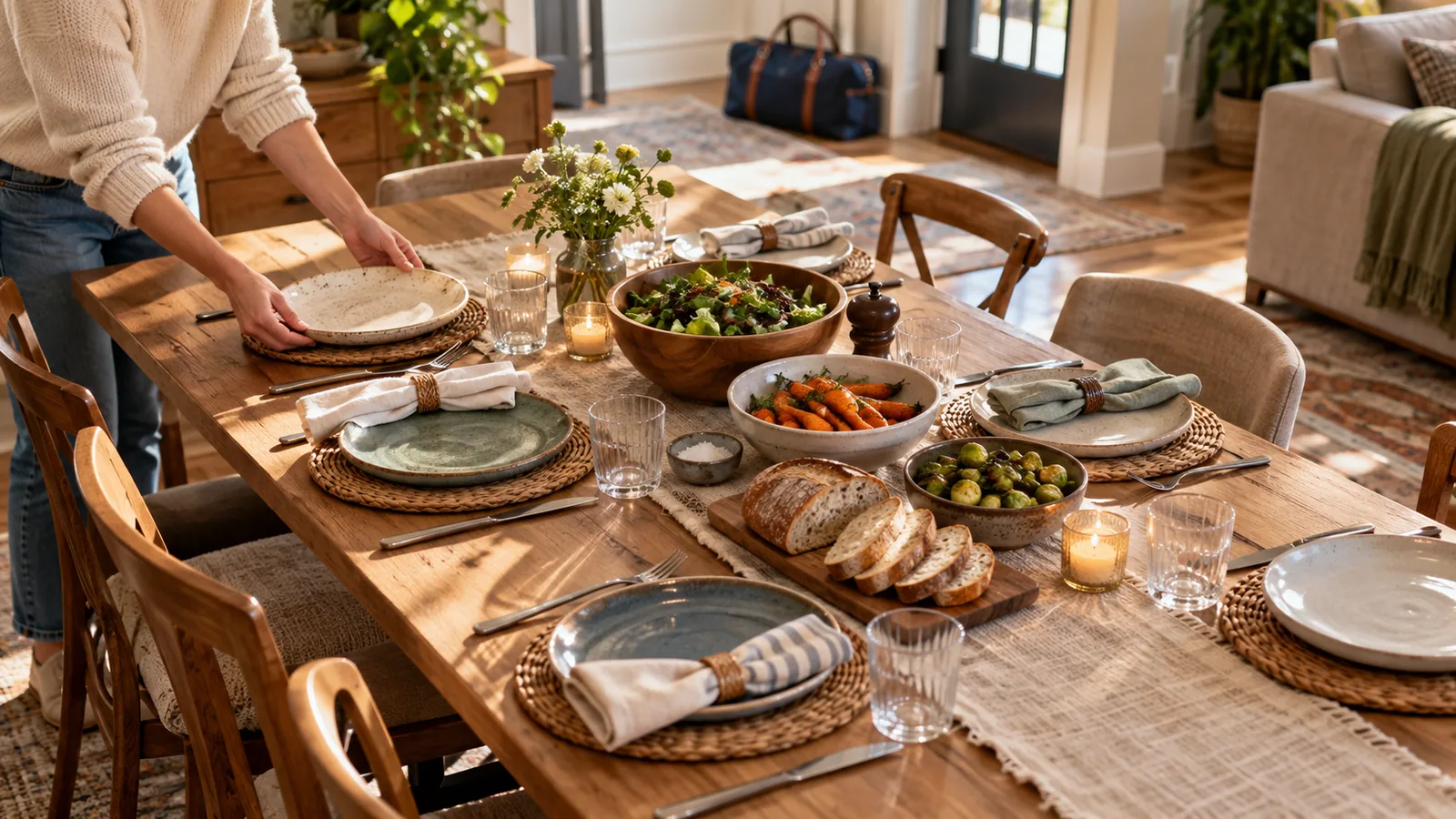
Meal planning for house guests starts with the meals people will actually eat at home. Confirm arrival and departure times, meals out, preferences, and who can help. Plan a few reliable shared meals and easy self-serve options rather than treating every day of the visit as a dinner party.
The example below is a household planning method for a short visit. Adjust quantities and food choices to the people attending; the number of overnight guests alone is not a meal count.
Count attendance meal by meal
Make a small grid with the dates across the top and breakfast, lunch, and dinner down the side. Mark household members and visitors who expect to eat each meal. Ask whether visitors have plans of their own before buying for every slot.
For a Friday-to-Sunday visit, guests may arrive after Friday dinner, eat Saturday lunch out, and leave before Sunday dinner. That creates a very different shopping list from multiplying your usual meals by three extra people for three complete days.
Ask about needs before choosing the menu
Invite guests to tell you about food requirements, preferences, and anything they plan to bring. Where a requirement affects preparation or ingredients, agree the details directly rather than assuming that a familiar dish will fit. Keep the information available to the people preparing the food.
Decide which meals you will host and which can be shared, bought, or left flexible. This gives guests a useful way to contribute. “Could you handle Saturday breakfast and tell me what fridge space you need?” is easier to act on than a general offer to help.
Use a short menu with a flexible slot
Choose meals you already know how to prepare in the available kitchen. Keep breakfasts and some lunches simple, with clearly identified ingredients guests can find. Leave one slot undecided if sightseeing or family plans may change.
Copy this meal record: Day and meal; confirmed eaters; dish or plan; preparation owner; guest contribution; ingredients already available; items to buy; cleanup owner. For Saturday dinner, the host might prepare a familiar main while a visitor brings the agreed side.
Build one shopping list from the confirmed plan
Check the pantry and refrigerator before adding ingredients. Group shared ingredients across meals, then keep each quantity tied to its use. If breakfast and lunch both need the same item, add their needs together rather than creating two unexplained entries.
Domio’s meal planner and shopping lists can hold the chosen meals and ingredients. Check the final quantities yourself against the attendance grid. Do not count on an app to know when a visitor has accepted an invitation to eat elsewhere.
Plan the kitchen handoff as well as the cooking
Show helpers where ingredients, serving items, and cleanup supplies belong. Assign an outcome such as clearing and resetting the breakfast area, rather than leaving the host to direct every small job. Keep the ordinary household’s next-day needs in mind.
After the visit, note which meals were useful and which purchases were unnecessary. Keep that small record for the next visit. Start this visit’s plan by confirming just the first shared dinner and the first morning’s breakfast, then fill the remaining known meals.
Continue planning with Domio
Turn the ideas in this guide into one shared plan for your family.
Try DomioFrequently asked questions
How many meals should I plan for overnight guests?
Count the meals guests expect to eat at home rather than the nights they stay. Confirm arrival, departure, outings, and contributions before choosing quantities.
Should every meal for house guests be cooked by the host?
Agree what the household can manage. Self-serve breakfasts, guest contributions, and meals out can all be part of the plan when everyone understands the arrangement.
How can I avoid buying too much for visiting family?
Use a meal-by-meal headcount, check what is already available, and combine shared ingredients into one quantity. Leave uncertain meals flexible until attendance is confirmed.