
Grocery List for Large Families: Plan Quantities Without Overbuying
Build a grocery list for a large family from real meals, useful quantities, pantry checks, clear substitutions, and shared ownership.
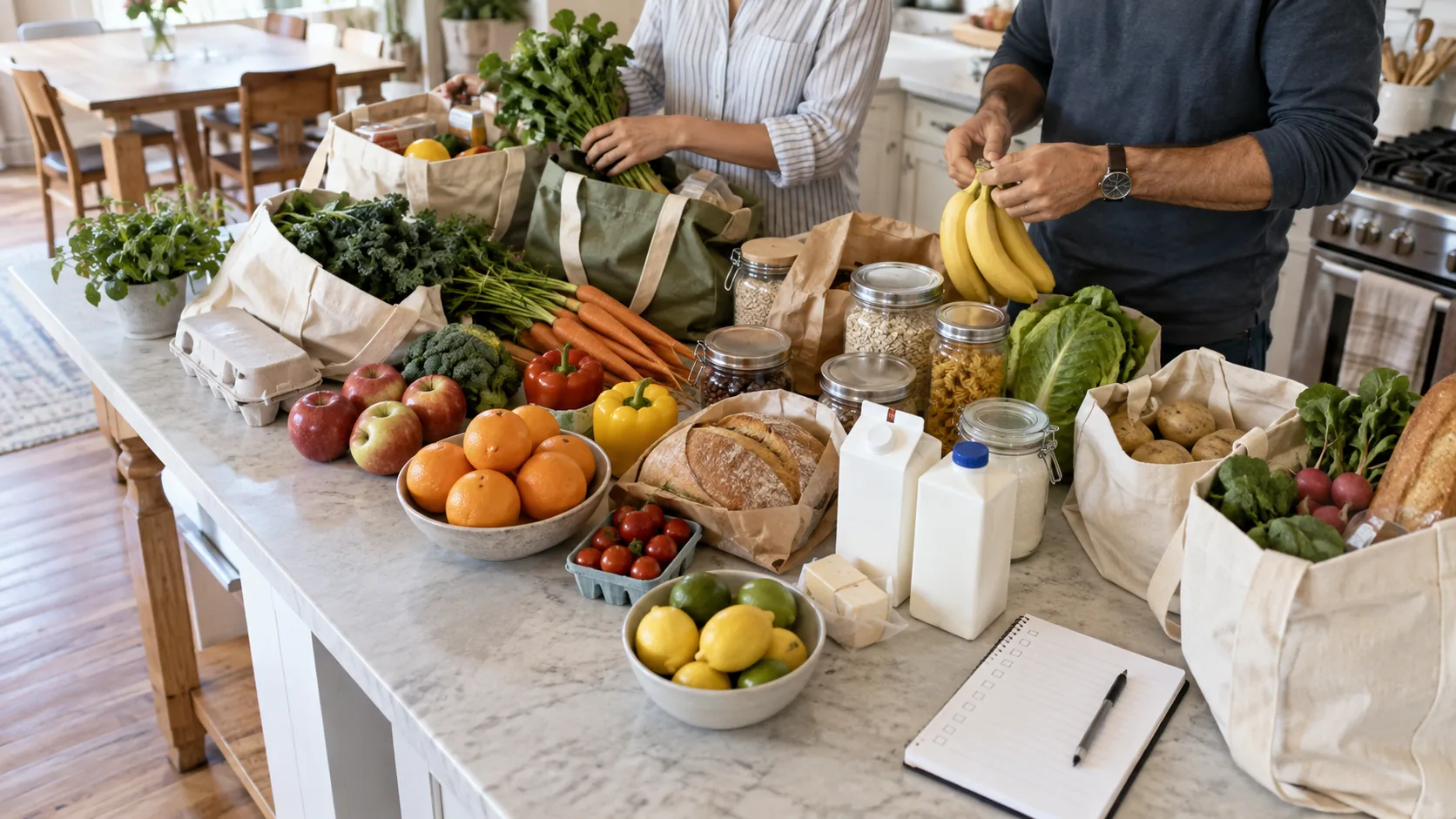
Shopping for a large household magnifies small planning errors. A vague item can become the wrong bulk size, an unrecorded schedule change can leave food unused, and two shoppers can duplicate an expensive category. At the same time, an overly detailed master list can become so difficult to maintain that nobody trusts it.
A useful grocery list for a large family starts with the meals and people actually present, then adds household staples, specific quantities, and clear ownership. It should help the shopper make ordinary decisions without pretending there is one universal list for every large family.
Count meals and people before counting items
Review the week for dinners at home, packed lunches, breakfasts, snacks, guests, activities, and nights when part of the family is elsewhere. Build quantities from that pattern rather than multiplying a generic list by household size.
Preferences, ages, dietary needs, and appetite vary, so use the family’s recent consumption as the starting point. When a quantity repeatedly leaves too much or runs short, adjust the household baseline instead of treating every week as a new guess.
Separate meal ingredients from recurring staples
Meal ingredients should connect to confirmed recipes or flexible dinner components. Recurring staples cover the items the household uses regardless of the menu, such as breakfast basics, school snacks, toiletries, paper goods, or pet supplies. Keeping the two sources visible makes the list easier to audit.
Do not automatically add every staple every week. Use a quick pantry, refrigerator, freezer, and household-supply check to mark what is low, out, or better used before buying more.
Write quantities and substitutions another shopper can use
“Yogurt” may not be enough information for a large-family shop. Add the useful size, number, flavor boundary, or purpose when it matters. For flexible items, note what can be substituted. For non-substitutable items, say so without making the shopper guess.
Keep optional purchases separate from essentials. This makes it easier to respond to budget, availability, or storage limits without accidentally skipping something that a confirmed meal depends on.
Divide a large shop by complete areas
If several people shop, assign stores or categories with clear boundaries and a shared completion signal. One person might own the warehouse-store run while another handles produce and same-week items. Avoid having both people work from screenshots that stop updating.
When shopping happens across several days, note which items are urgent and which can wait. A single shared list should show what was purchased, what was unavailable, and what still needs a decision.
Review shortages, waste, and storage pressure
After the week, notice the categories that ran out early, went unused, or were difficult to store. A lower unit price does not help when the household lacks a realistic use plan or safe storage space. The useful quantity is the amount the family can consume and manage.
Change one or two baselines at a time. The list becomes more accurate through small feedback loops, not through a perfect master inventory built in one weekend.
How Domio supports a large-family grocery workflow
Domio connects family meal planning with a shared grocery list that household members can update. Confirmed recipes can feed shopping needs, and the family can add custom items for staples and other household supplies.
Use the family calendar to shape quantities, the meal plan to define ingredients, and the shared list to coordinate shoppers. Prices, availability, nutrition needs, and safe storage still need to be checked against the family’s real stores and circumstances.
Continue planning with Domio
Turn the ideas in this guide into one shared plan for your family.
Try DomioDomio shared grocery list
Keep updates and completion visible when several people contribute or shop.
family meal planning
Build quantities from the meals and people actually in the weekly plan.
build a family grocery list
Use one shared structure for meals, staples, and household requests.
pantry inventory checklist
Check what is low, out, or better used before buying in bulk.
Frequently asked questions
How do I make a grocery list for a large family?
Count the meals and people at home, build ingredients from confirmed plans, check recurring staples and current inventory, then add useful quantities and substitution notes.
Is buying in bulk always better for a large family?
No. Bulk purchasing helps only when the household will use the quantity, has appropriate storage, and can manage the upfront cost. Compare the real use plan, not only the unit price.
How can multiple shoppers avoid duplicate purchases?
Work from one live shared list, divide the shop by clear areas, and mark items complete or unavailable as the shop happens instead of sending static screenshots.