Pantry Inventory Checklist: Know What to Use, Restock, and Skip
Use a practical pantry inventory checklist to spot low-stock staples, use food sooner, and build a more accurate family grocery list.
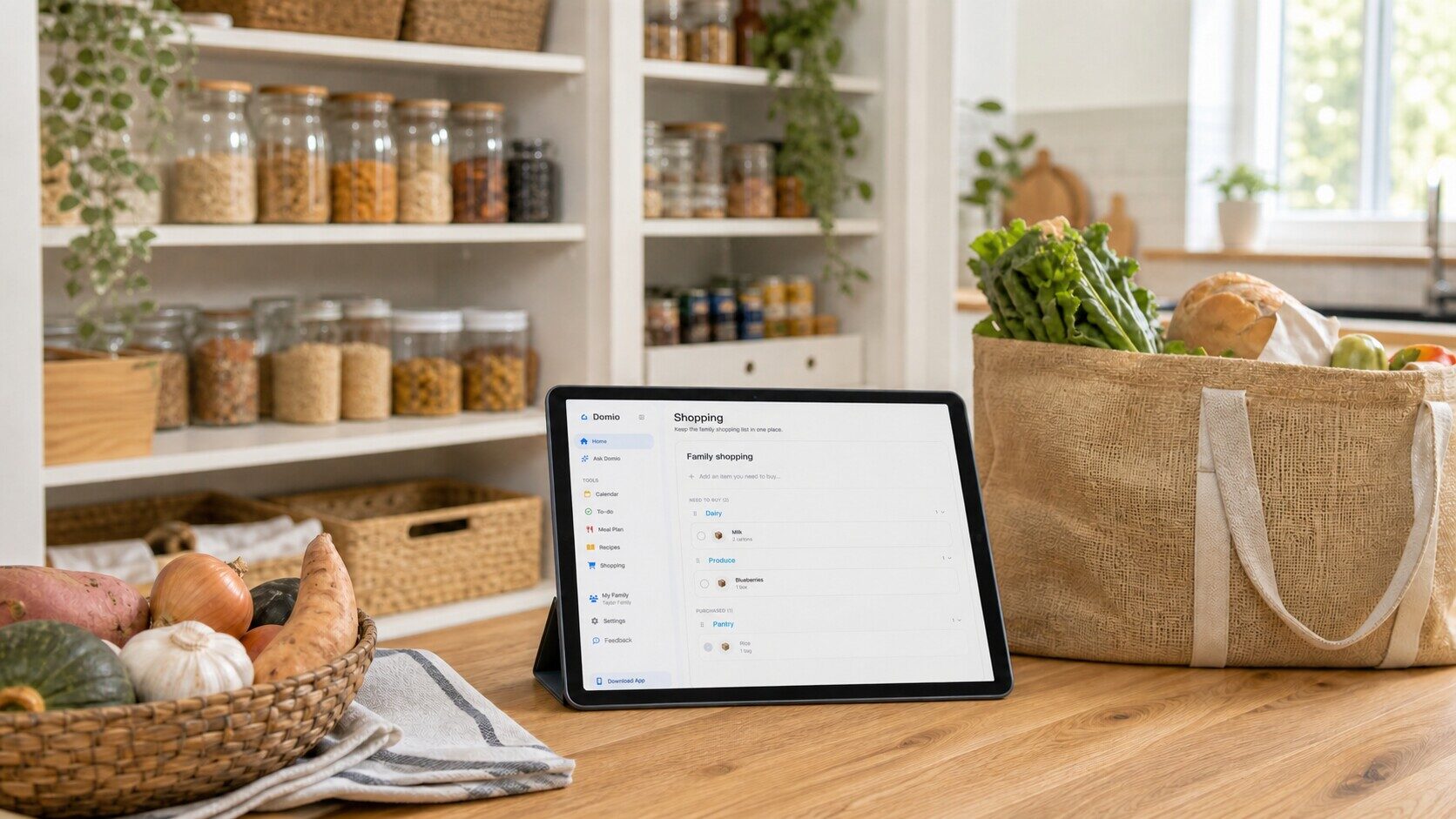
A pantry can look full while still missing the one ingredient dinner depends on. It can also hold three backups of the same item because nobody checked before shopping.
A pantry inventory checklist gives families a lightweight way to see what is low, what should be used soon, and what does not need to be bought again. It should support meal planning and shopping without turning the kitchen into a warehouse database.
Choose the inventory depth the family will maintain
Most households do not need an exact count of every snack or spice. Track staples that regularly run out, higher-cost items that are easy to duplicate, freezer food that is hard to see, and ingredients linked to recurring meals.
Use simple states such as available, low, out, and use soon. A system that requires weighing, scanning, or updating every serving will only work if the household genuinely wants that level of detail.
Review the kitchen by storage zone
Check dry pantry shelves, baking supplies, breakfast items, snacks, condiments, refrigerator staples, and freezer sections one zone at a time. Storage zones are easier to review than an alphabetical master list.
Group similar items together while checking. Visibility is part of inventory accuracy: if nobody can see the open bag behind two unopened bags, the checklist will drift immediately.
Separate restock items from use-soon food
Low and out items belong on the grocery list when the family expects to use them. Food approaching its practical use window belongs in the next meal plan, not automatically on the shopping list.
This distinction helps prevent the cycle of replacing food before using what is already available. Follow package dates, storage instructions, and appropriate food-safety guidance rather than guessing whether food is safe.
Build the weekly meal plan from constraints
Before choosing meals, scan the use-soon list and the busiest nights on the calendar. Select realistic meals that use available ingredients without forcing the entire week around pantry cleanup.
Then add only the missing meal ingredients and staple replacements to the shared grocery list. The inventory answers “what is here”; the grocery list answers “what should we buy.”
Use a short weekly check and a deeper monthly reset
A five-minute check before grocery planning can cover milk, eggs, breakfast, lunch supplies, recurring dinner staples, and obvious freezer gaps. A monthly review can catch duplicates, older items, and categories that no longer match how the family eats.
Keep the inventory lightweight. The useful outcome is not a perfectly counted pantry; it is a smaller set of restock and use-soon decisions that can shape the next meal plan and shopping trip.
How Domio uses a pantry check without claiming inventory tracking
Domio is not a dedicated barcode or stock-control system. The family can keep a simple pantry checklist, then use Domio to connect the actionable results—meals to make, groceries to buy, and time available to cook—with the weekly calendar.
For example, “use the spinach soon” becomes useful when it informs a scheduled meal, while “we are low on rice” belongs on the shared grocery list. Domio helps coordinate those decisions without requiring the household to maintain a warehouse-style database.
Continue planning with Domio
Turn the ideas in this guide into one shared plan for your family.
Try DomioFrequently asked questions
What should a pantry inventory checklist include?
Track frequently used staples, easy-to-duplicate items, freezer food, and useful states such as available, low, out, and use soon.
How often should a family check pantry inventory?
Use a short check before weekly grocery planning and a deeper review about once a month. Adjust the cadence to how quickly the household uses staples.
Is a pantry inventory the same as a grocery list?
No. The inventory records what is available or low. The grocery list contains the specific items the family has decided to buy for meals and restocking.