
Household Restock Checklist: Refill Supplies Before They Run Out
Create a household restock checklist for bathroom, laundry, kitchen, and cleaning supplies with one reserve location and a clear purchasing owner.
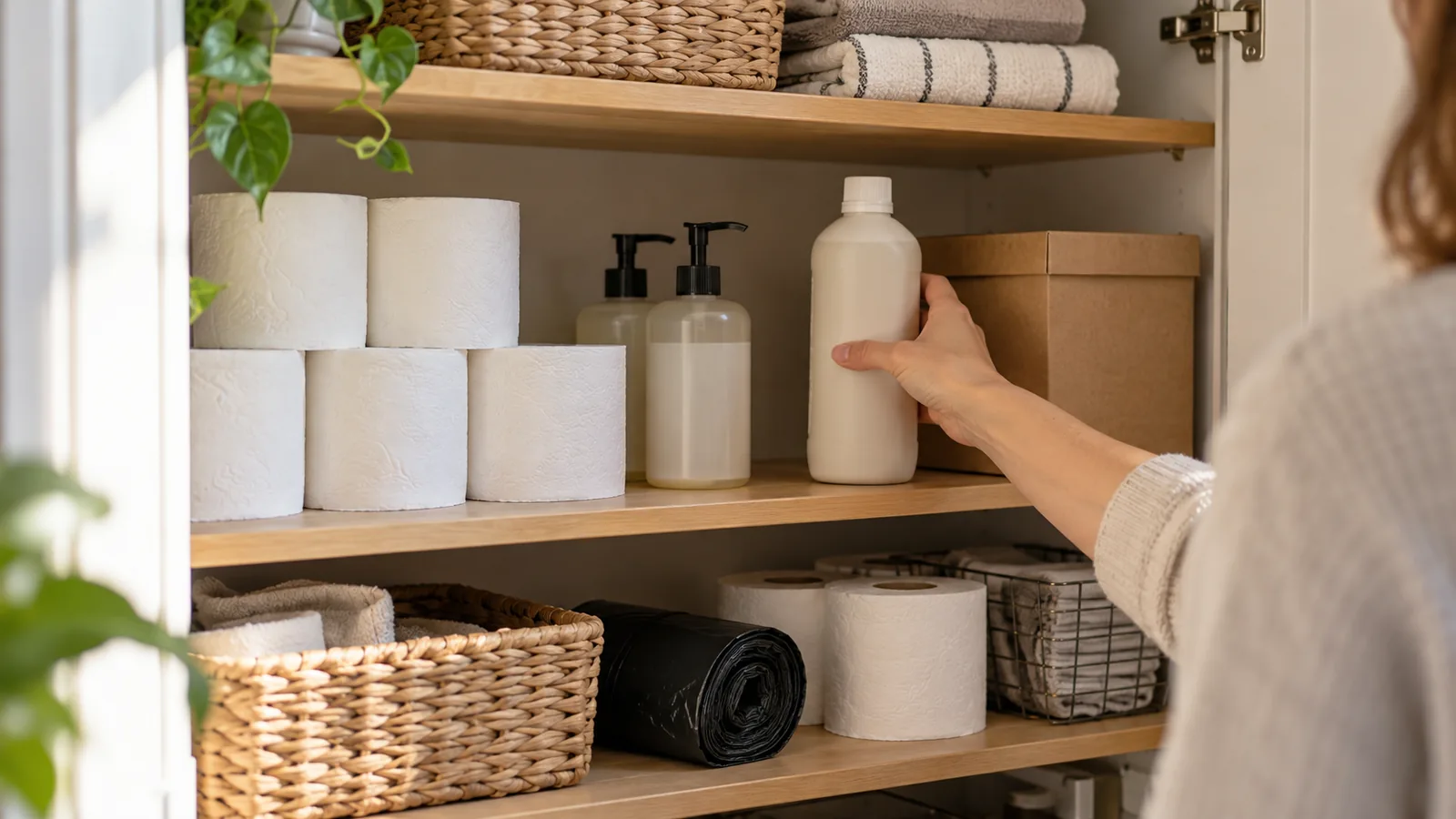
A household restock checklist covers the everyday non-food supplies that disappear quietly: toilet paper, dish soap, laundry supplies, trash bags, and similar essentials. For each item, record where the reserve lives, what triggers a purchase, and who checks the list before shopping.
Start with the items your household actually uses. A long generic inventory can encourage unnecessary purchases and take more work to maintain than the supplies themselves.
Walk the rooms instead of copying a huge list
Check the bathroom, kitchen, laundry area, and usual supply storage. Write down the products already in use, including the size or type that matters. Leave out occasional purchases until there is a real need to track them.
An initial list might include toilet paper, hand soap, dish detergent, laundry detergent, and the correct trash bags. These are examples, not a required shopping basket. The point is to identify the items whose absence interrupts your ordinary routine.
Give reserves one understandable home
If supplies are scattered across cupboards, an empty package can trigger another purchase while a reserve sits unnoticed elsewhere. Record the agreed storage location and check it before adding an item to the shopping list.
Choose storage that follows product labeling and suits the household. Keep original instructions available. The checklist should identify where supplies belong; it should not encourage moving products into unsuitable containers or treating different cleaning products as interchangeable.
Set a practical purchase trigger
Decide what a person should notice before making a request. For one item, the trigger may be opening the last reserve. For another, it may be the next regular shopping trip after a visible level is reached. Adjust to actual use, delivery time, and storage space.
Copy this record: Item and required type; active location; reserve location; purchase trigger; quantity to buy; list owner; purchase status. A trigger is a household agreement, not a universal stock level. Check consumption before increasing the amount stored.
Separate noticing from buying
Anyone who reaches the trigger can add the request. One named person can check for duplicates and confirm who will buy it. Mark an item as ordered when an order exists and as available only after it arrives and is put away.
For example, opening the last dish-soap reserve creates a request; Morgan accepts the purchase during the next shop; the entry closes when the replacement reaches its storage place. This prevents two adults from responding independently to the same empty bottle.
Keep only the checklist details that change a decision
If an item never runs short, it may not need its own recurring review. If a product is repeatedly overbought, lower the agreed purchase quantity or check the reserve location more clearly. Use the list to fix an observed problem rather than tracking every object in the home.
Domio’s shopping list can hold restock purchases and its task list can hold a room check. This is a manual workflow, without an assumption of automatic inventory sensing. Begin with five recurring essentials and review the results after the next shopping cycle.
Continue planning with Domio
Turn the ideas in this guide into one shared plan for your family.
Try DomioFrequently asked questions
What belongs on a household restock checklist?
Include the non-food consumables your household uses repeatedly, with the type, storage location, purchase trigger, and owner. Start with the supplies that most often run out.
How much backup stock should I keep?
Choose an amount that fits actual use, storage, product instructions, and the time needed to obtain a replacement. There is no single reserve quantity that suits every household.
How do I avoid duplicate household-supply purchases?
Check the reserve location, keep one shared request, and name the buyer. Distinguish requested, ordered, and actually available items in whatever format your list supports.