Shared Pet Care Schedule: Keep Feeding, Walks, Supplies, and Appointments Clear
Create a shared pet care schedule with recurring routines, clear owners, backup coverage, supply reminders, and appointment context.
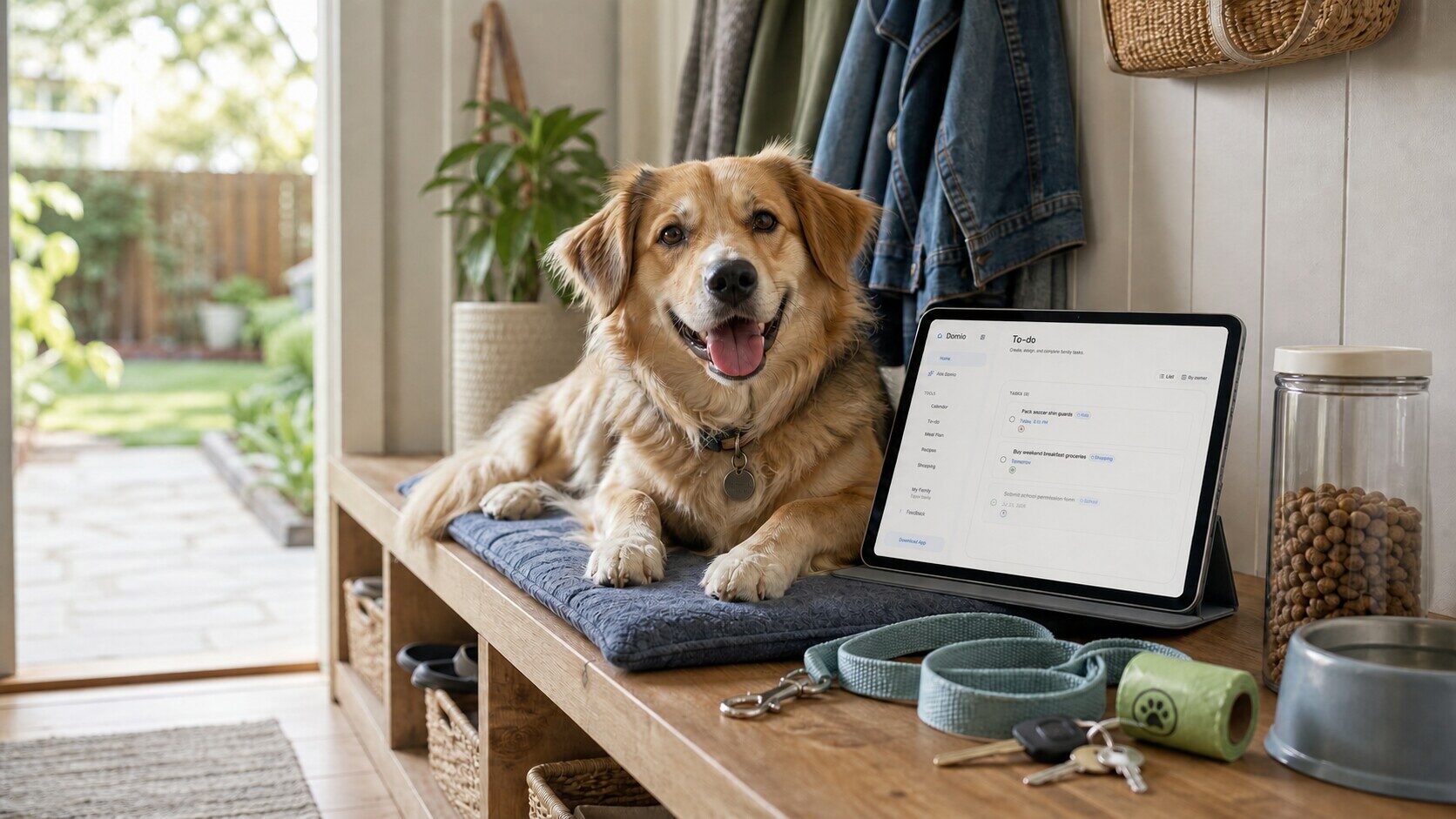
In a busy household, pet care can depend on a question nobody wants to keep asking: did someone already do it? Feeding, walks, litter, grooming, supply restocking, and appointments become fragile when responsibility changes from day to day.
A shared pet care schedule gives the household one reliable view of what is due, who owns it, and when backup coverage is needed. It supports coordination; it does not replace professional veterinary guidance or a medical record.
Separate daily routines from dated events
Daily or weekly routines include feeding, water, walks, litter, habitat cleaning, grooming, and other care appropriate to the animal. Dated events include veterinary appointments, boarding, grooming visits, and supply deliveries.
Keeping these two types visible prevents appointments from getting buried in a chore list and prevents ordinary care from disappearing between calendar events.
Give each routine a primary and backup owner
Assign a primary person for each routine and name the backup when work, school, or travel may interfere. “Someone walk the dog” is an invitation for everyone to assume another person handled it.
Children can participate in safe, age-appropriate care with adult supervision. An adult should retain responsibility for health decisions, safety, and confirming that essential care is complete.
Define the completion signal
The schedule should make it easy to mark a routine done. This prevents duplicate feeding, missed walks, and follow-up texts. Use brief factual notes only when the next caregiver needs context.
For medications or health-related routines, follow the veterinarian’s written instructions exactly. A family organizer can coordinate the assigned time and owner, but it should not invent doses or replace veterinary advice.
Connect supplies to the care routine
Food, litter, waste bags, grooming supplies, and other essentials should enter the shared grocery or household list before they run out. Set a restock point that reflects delivery time and normal usage.
Avoid tracking every item just because it is possible. Focus on supplies where running out would disrupt care or create an urgent store trip.
Plan handoffs before travel and long days
When a sitter, neighbor, relative, or boarding provider helps, share only the relevant schedule, contact information, access instructions, and veterinarian-approved care notes. Confirm who handles the first and last routine around the handoff.
A useful handoff says what needs to happen, when, and how completion will be confirmed. Medical records, diagnoses, and treatment decisions should remain with the veterinarian and the appropriate specialist system.
How Domio keeps pet care in the family plan
Domio can keep recurring pet tasks, dated appointments, reminders, and supply needs alongside the household calendar. If the usual dog-walk owner is suddenly unavailable, the family can see the gap in the same context as work, school, and travel.
The value is coordination, not veterinary tracking: assign the routine, identify a backup, add the needed supplies, and keep the confirmed handoff visible without asking one person to chase everyone for updates.
Continue planning with Domio
Turn the ideas in this guide into one shared plan for your family.
Try DomioFrequently asked questions
What belongs on a shared pet care schedule?
Include recurring care, dated appointments, primary and backup owners, a completion signal, supply restocking, and relevant handoff information.
Can children own tasks on a pet care schedule?
Children can handle safe, age-appropriate routines with adult supervision. An adult should remain responsible for health, safety, and essential follow-through.
Can a family organizer replace a veterinary app or medical record?
No. It can coordinate schedules and owners, but medical instructions, doses, health records, and treatment decisions should come from the veterinarian and appropriate specialist systems.