
Rotating Family Meal Plan: Reuse Dinners That Fit
Build a rotating family meal plan with repeatable dinners, flexible activity nights, clear grocery quantities, and a weekly check before repeating the cycle.
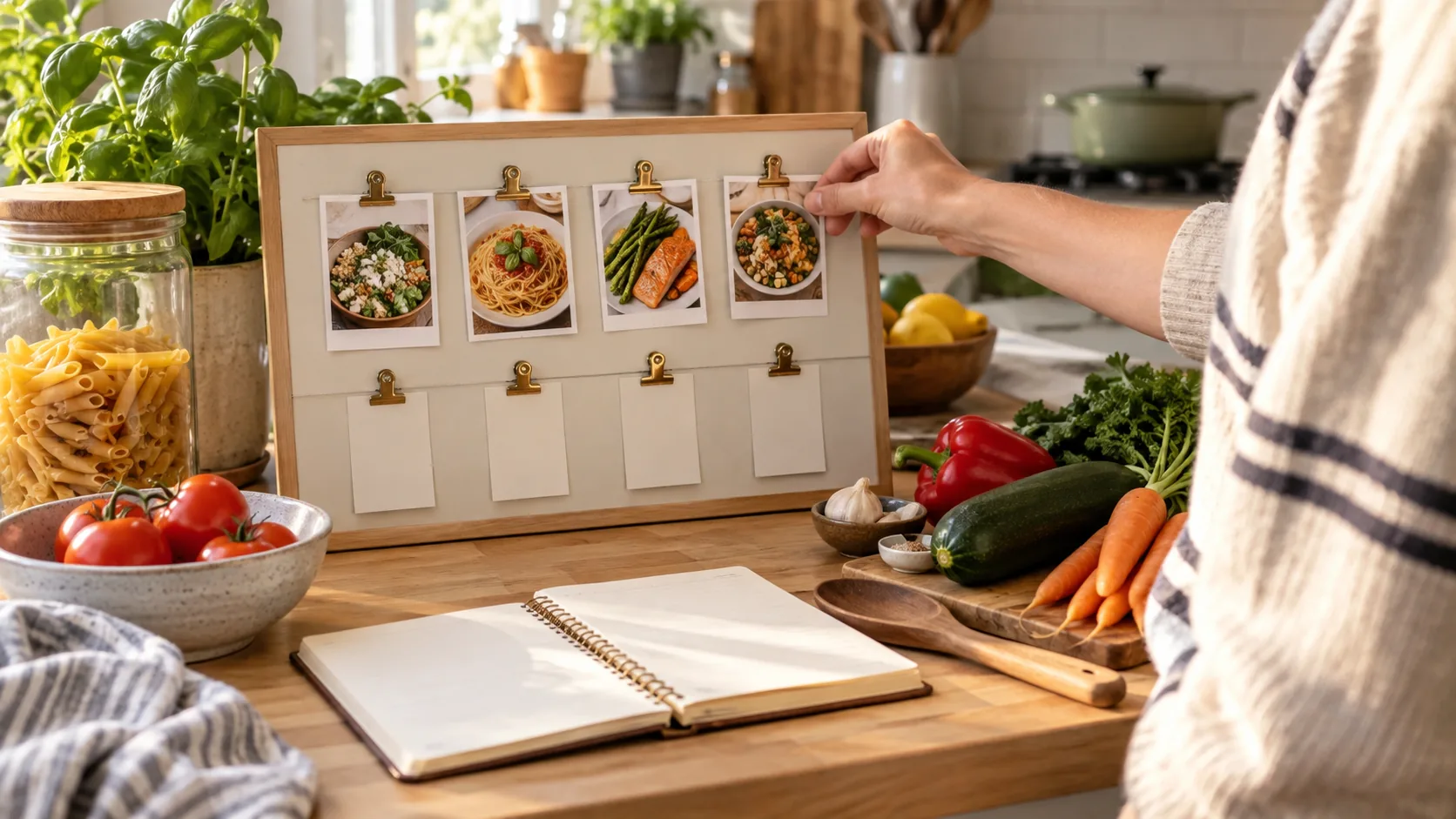
A rotating family meal plan reuses a small cycle of dinners while leaving room for the week’s actual schedule. Choose meals the household already accepts, match them to available preparation time, and check groceries before the cycle repeats. Treat the rotation as a starting plan that can be edited.
This guide is for parents tired of starting dinner planning from a blank page. It focuses on household decisions and shopping coordination, not a nutritional prescription or a promise that one menu suits every family.
Build the rotation from dinners you already use
List meals the family has recently eaten and is willing to repeat. Note preparation effort, cooking equipment, and ingredients that need advance attention. Start with a short cycle you can fill honestly rather than adding unfamiliar recipes just to reach an impressive number.
For a sample two-week rotation, choose several familiar dinners plus flexible nights. Repeating a meal is useful when it removes a decision; it stops helping if the household regularly rejects it or the cook lacks time to make it.
Match each dinner to an evening type
Sort evenings into quick preparation, ordinary cooking, and flexible or late-return nights. Assign dinners to those types before choosing specific weekdays. Then match the current activity schedule to the rotation.
If Tuesday becomes a late practice night, move a more involved meal to a suitable evening and use a familiar quick option. Keep ingredients in mind when moving meals so a schedule adjustment does not leave something perishable without a use plan.
Copy a meal-rotation template
Use one record per dinner: Meal; evening type; preparation owner; advance step; household portions; ingredients to check; alternative if plans change. For example: familiar pasta dinner; quick evening; Jo cooks; check sauce and pasta; count who is eating; use the agreed alternative if the family returns late.
Keep a blank or flexible slot when the week is uncertain. A rotation should not require you to invent dinner attendance several weeks in advance. Confirm the actual people and portions during the weekly check.
Generate the grocery list from this week’s choices
After adapting the rotation, check the fridge, freezer, and pantry before listing ingredients. Combine quantities for meals that share an ingredient and distinguish a household staple from something needed for one recipe.
Do not blindly repeat last cycle’s shopping list. Guests, leftovers, changed attendance, and existing supplies can all alter what is needed. Give substitutions or uncertain items a decision owner so the shopper is not left solving the menu in the store.
Review the cycle without rebuilding everything
After a rotation, keep the dinners that worked and replace the ones that repeatedly caused trouble. Note whether the issue was timing, acceptance, ingredients, or preparation ownership. Change the relevant slot rather than starting from scratch.
Use Domio’s meal planning and grocery workflow to organize the current week’s choices alongside family commitments. Begin with one repeatable week, leave a flexible night, and expand the rotation only when the first version makes dinner easier to decide.
Continue planning with Domio
Turn the ideas in this guide into one shared plan for your family.
Try DomioFrequently asked questions
What is a rotating family meal plan?
It is a repeatable cycle of dinners that you adapt to the current week. The cycle reduces blank-page decisions while allowing changes for activities, attendance, and ingredients.
How many weeks should my meal rotation cover?
Start with the shortest cycle that provides useful variety for your household. One or two weeks can be an example starting point; expand only when the meals and preparation routine work.
Can I repeat the same grocery list each cycle?
Use it as a reference, then recheck meals, quantities, attendance, and supplies. A reusable menu does not mean the household needs identical purchases every time.