
Family Laundry Schedule: Get Every Load All the Way Home
Create a family laundry schedule with clear load types, owners, finish states, timing, and backups so clean clothes do not stall.
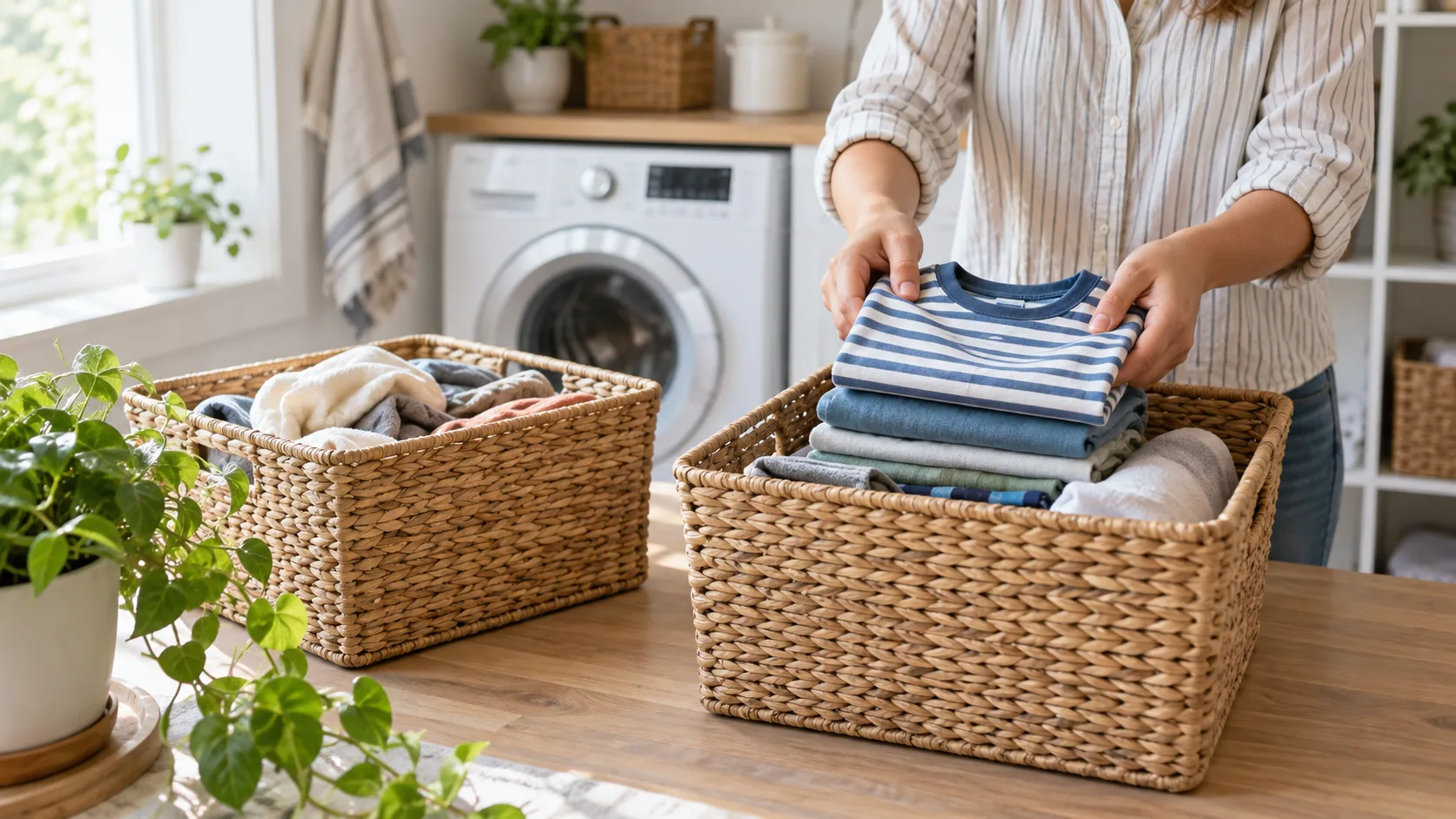
Laundry can be washed all week and still feel unfinished. A clean load waits in the dryer, a basket stalls by the stairs, sports clothes are needed before they return to the closet, and nobody knows whether “doing laundry” included folding or putting away.
A family laundry schedule works when it plans the complete cycle: collect, sort, wash, dry, fold or hang, return, and reset. The goal is not to assign every garment to a spreadsheet. It is to protect the few handoffs where clean clothes most often stop moving.
List the repeat load types your household actually creates
Start with ordinary categories such as adult clothes, children’s clothes, towels, bedding, sports gear, workwear, or reusable household cloths. The useful categories depend on care instructions, capacity, and how the household puts items away.
Estimate how often each load becomes necessary from recent experience. Do not copy a daily schedule from another household. Family size, machine capacity, clothing needs, pets, activities, and available drying space change the rhythm.
Define where each clean load ends
Name the finish state before choosing a day. Towels may finish on the linen shelf, bedding back on beds, and a child’s clothes in a labeled bedroom basket. If the household intentionally leaves some items unfolded, make that the agreed result rather than treating it as a failed final step.
The schedule should show the handoff between the person running the machine and the person returning items. A load is not complete merely because the machine stopped.
Schedule around demand and machine time
Work backward from real needs: uniforms before practice, work clothes before the next shift, bedding when there is time to remake beds, and towels before the household runs short. Include the time during which the machine is occupied and the point when someone must move the load.
Avoid packing every load into one ideal laundry day if interruptions regularly leave wet or clean items stalled. A smaller rhythm across the week may be easier to finish, while some households may prefer one concentrated block. Choose the pattern the household can complete.
Assign the full outcome and a realistic backup
Give an adult or capable household member ownership of the complete load outcome, then split age-appropriate steps when helpful. A child might collect, sort, match, or return their items while an adult remains responsible for machine settings and safety.
Use a backup rule for disruptions: which load can wait, which needs a substitute item, and who can finish a stalled cycle. The backup should reduce pressure, not hide a permanent imbalance in household work.
Respect care labels, safety, and household constraints
Follow garment care labels, detergent directions, machine instructions, and relevant safety guidance. Keep laundry products stored appropriately and give children only tasks suited to their age and household setup.
Special items may need a separate professional or manufacturer-approved process. The family planner should record the confirmed action and owner without inventing fabric-care advice.
How Domio can keep laundry in the family routine
Domio can represent repeat laundry outcomes as assigned household tasks and place time-sensitive loads beside sports, work, school, travel, and other routines. The family can see who owns a load and whether it reached the agreed finish state.
Start with the two load types that create the most disruption. Give them a day, owner, destination, and backup. Once those cycles reliably finish, decide whether the rest of the laundry needs scheduling at all.
Continue planning with Domio
Turn the ideas in this guide into one shared plan for your family.
Try DomioDomio family routines and to-dos
Assign repeat laundry outcomes and make completion visible.
family todo list
Share recurring household work without relying on repeated reminders.
household responsibilities checklist
Make noticing, planning, doing, and follow-up part of ownership.
weekly family planner
Place time-sensitive household routines beside the real family week.
Frequently asked questions
How do I make a family laundry schedule?
List the repeat load types, estimate their real frequency, define where each load finishes, then assign a day or trigger, complete owner, and backup for the loads that matter most.
Is it better to do laundry daily or once a week?
It depends on household size, machine capacity, clothing needs, drying space, and whether the family can complete the full cycle. Choose the rhythm that prevents stalled loads and shortages.
How can children help with family laundry?
Children can take age-appropriate steps such as collecting, sorting, matching, folding, or returning items. Adults should follow product, machine, and safety guidance and remain responsible where needed.