Budget Meal Planning for Families: Spend Intentionally Without Making the Week Harder
Plan affordable family meals around your real week, pantry, shared ingredients, and intentional convenience without relying on rigid menus.
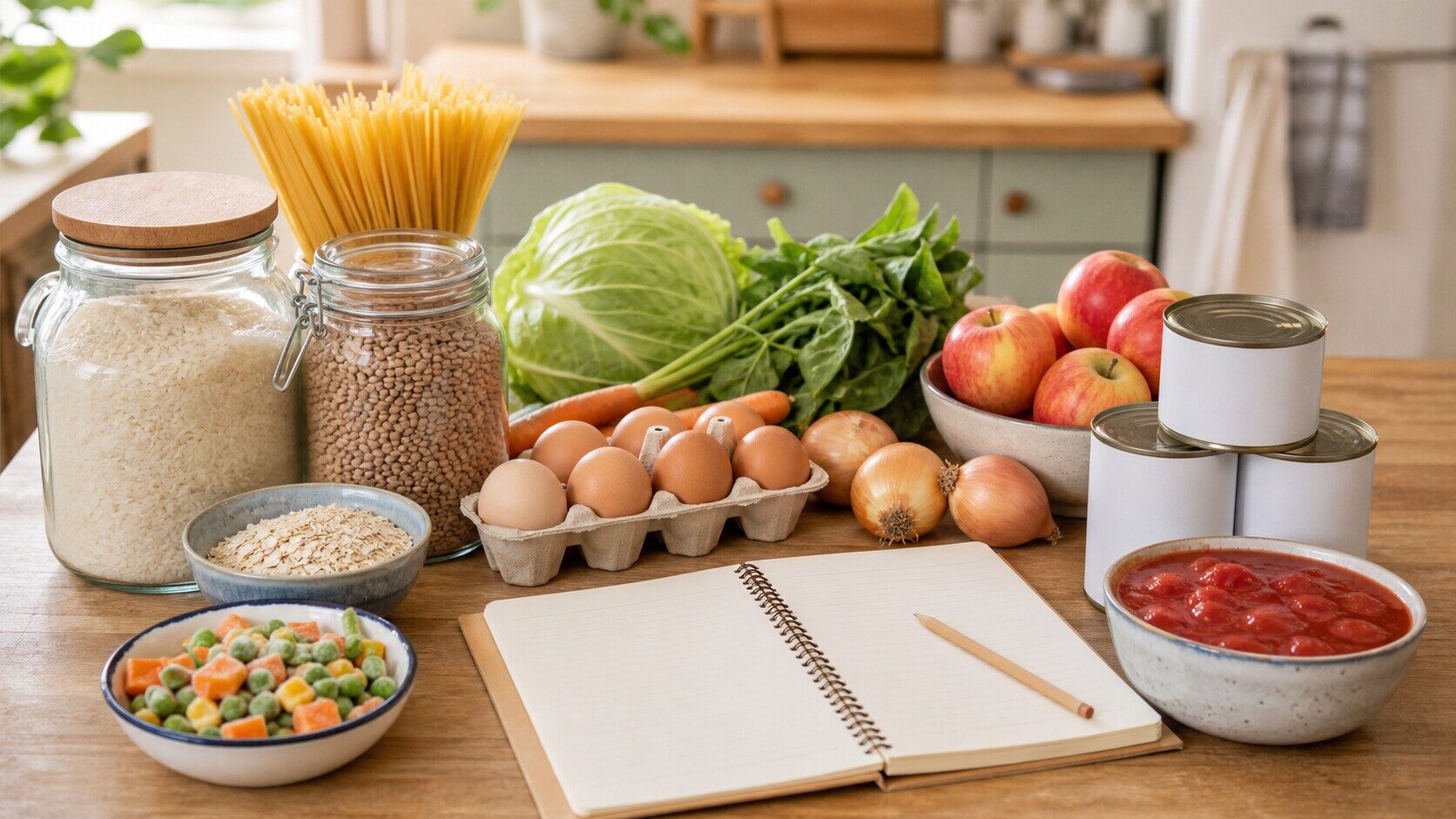
A low-cost meal plan is not helpful if it depends on cooking from scratch on the family’s busiest night, buying ingredients nobody enjoys, or remembering what is already hidden in the freezer. Budget meal planning works when the financial boundary and the actual week support each other.
The goal is not to create the cheapest possible menu. It is to spend intentionally, use what the household already has, reduce avoidable waste, and decide in advance where convenience is worth paying for. That makes the plan more likely to survive a late meeting, a changed pickup, or a tired Thursday.
Set a practical weekly boundary before choosing meals
Choose a household food target that reflects the people, location, dietary needs, and meals the week must cover. Separate unusual costs, such as hosting or travel food, so they do not make an ordinary week look like a failure. The target is a planning boundary, not a moral score.
Look at the calendar before dividing the budget across dinners. A week with late activities may need one planned convenience meal. A quieter week may allow a larger batch meal that supports lunches or the freezer. Spending less on the wrong night can create more expensive last-minute decisions later.
Check the pantry, fridge, and freezer first
Start with ingredients that are already open, nearing their useful window, or taking up freezer space. Identify a few items the family is genuinely willing to eat this week. An inventory is useful only when it leads to a meal decision, a restock action, or a deliberate choice to stop buying something.
Do not force every leftover ingredient into the menu. Pair use-soon food with familiar staples, and leave room to discard anything unsafe or unsuitable. Follow package guidance and relevant food-safety advice rather than relying on a planning app to judge whether food is safe.
Choose meals that share ingredients without feeling identical
Build the week around a few anchor ingredients that can move across different formats. Roasted vegetables might appear beside one dinner, in a grain bowl, and in a lunch. A batch of beans, chicken, rice, or sauce can support more than one meal without requiring the family to eat the same plate repeatedly.
Keep the overlap visible when making the grocery list. Buying one ingredient for several confirmed meals is different from buying a large quantity because it seems economical. The useful question is not only the unit price; it is whether the household has a realistic plan to use the amount.
Budget for convenience on purpose
Convenience food can protect the plan when time and energy are limited. Pre-cut vegetables, frozen components, a prepared protein, or a simple backup dinner may cost more than the most basic ingredients but still cost less than an abandoned plan and an unplanned order.
Choose where convenience matters before shopping. Put the faster meal on the evening with the tightest schedule and save the more involved meal for a day with enough preparation time. A budget plan should reduce pressure, not transfer all of it into unpaid kitchen work.
Turn the meal plan into a specific shared grocery list
Convert each planned meal into quantities, then subtract what is already available. Group the remaining items by the way the household shops and keep optional items visibly separate. A short list connected to real meals is easier to update than a running collection of good intentions.
After the week, notice which meals were cooked, changed, or skipped. Use that information to adjust quantities and timing rather than treating the plan as something the family either followed or failed. The next budget becomes more realistic when it reflects actual patterns.
How Domio connects the budget plan to the real week
Domio can keep family schedules, meal plans, grocery needs, and shared responsibilities connected. That makes it easier to place faster meals on crowded evenings, turn confirmed meals into shopping actions, and keep pantry or preparation tasks visible to more than one person.
Domio is not a coupon, price-comparison, nutrition, or financial-advice service. Prices and availability should be checked with the family’s actual stores, while dietary and medical needs belong with qualified guidance. Domio helps coordinate the household decisions around those facts.
Continue planning with Domio
Turn the ideas in this guide into one shared plan for your family.
Try Domiofamily meal planning with Domio
Connect the weekly menu to the days when the family will actually cook and eat.
shared grocery planning
Turn confirmed meals and pantry gaps into visible shopping actions.
pantry inventory checklist
Decide what to use soon, restock, or stop buying before making the list.
meal prep planner for families
Prepare only the components that make the busiest nights easier.
Frequently asked questions
How do I start budget meal planning for a family?
Set a realistic weekly boundary, review the calendar, check what is already available, choose meals with useful ingredient overlap, and build a grocery list from confirmed quantities.
Does budget meal planning require cooking everything from scratch?
No. Planned convenience can make a lower-cost week more durable. Choose where prepared or frozen components prevent last-minute spending and reduce pressure on the household.
How can a family reduce food waste while meal planning?
Start with use-soon ingredients, buy quantities tied to specific meals, keep one flexible meal, and review what was actually cooked before planning the next week.