Why try an AI family assistant? Meet Domio
Learn what an AI family assistant is, how it differs from calendars and to-do apps, and why busy households need proactive coordination.
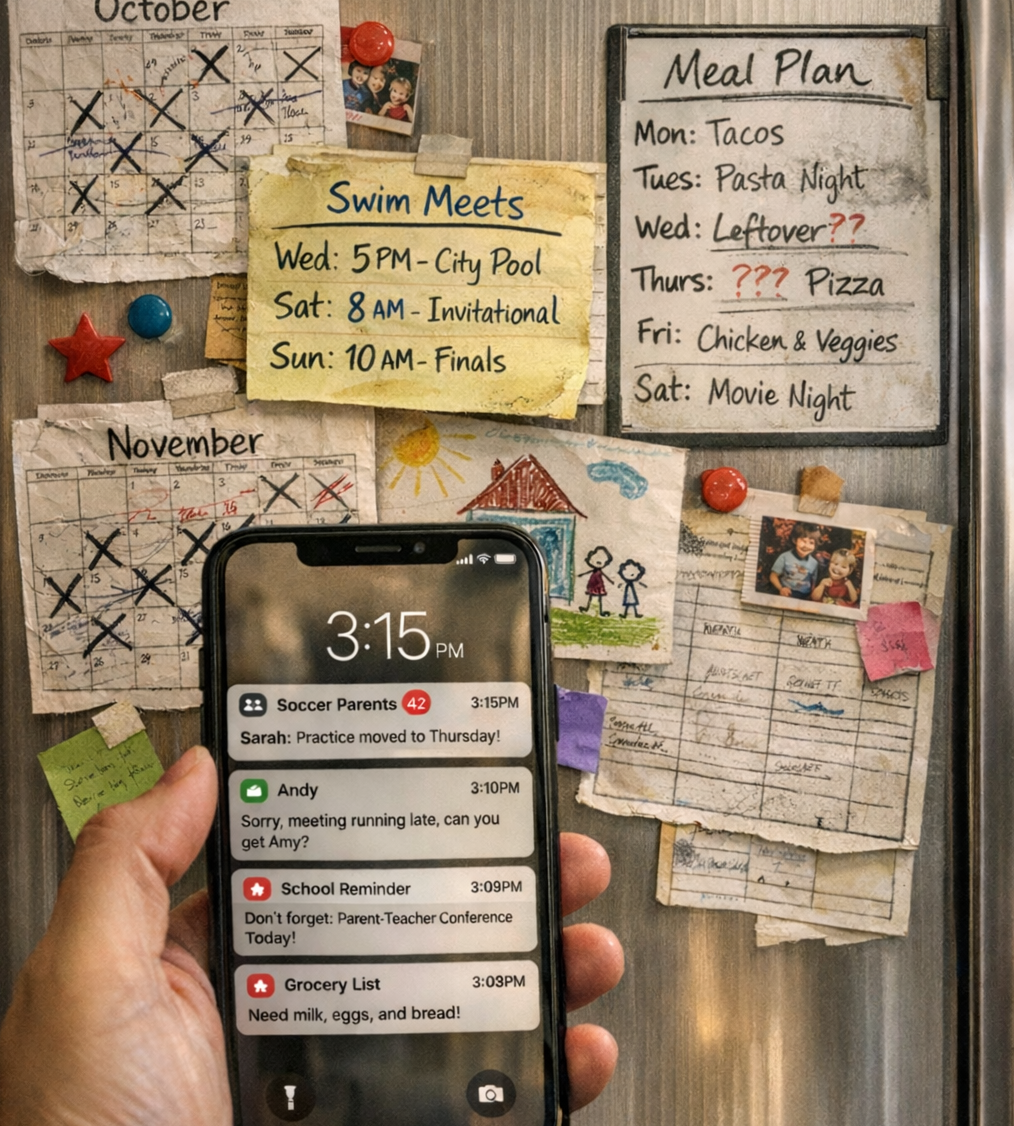
An AI family assistant is not another place to dump tasks. At its best, it is a system that understands family context and helps coordinate what happens next.
For busy parents, the difference matters. A calendar can remember that soccer pickup is at 4:00. A proactive assistant can notice when that pickup collides with a work meeting, dinner plan, or caregiver handoff.
What an AI family assistant actually does
A useful AI family assistant does not simply answer questions. It pays attention to the everyday objects of family life: calendar events, dinner plans, school changes, grocery needs, reminders, recurring routines, and the people who need to know when something changes.
That means it sits between raw information and household action. A school email becomes a calendar update. A late meeting becomes a pickup problem. A blank dinner plan becomes a grocery decision. The assistant is valuable when it reduces the number of small translations a parent has to do manually.
How it differs from calendars and to-do apps
Calendars are built around time. To-do apps are built around tasks. Family coordination is built around context. A single event can affect dinner, transportation, bedtime, caregiver handoffs, and what needs to be packed before leaving the house.
An AI family assistant is different because it can connect those pieces. It should not replace the calendar. It should make the calendar more useful by understanding what a calendar event means for the rest of the household.
Where AI is helpful and where it should stay humble
AI is helpful for pattern matching, summarizing messy input, catching conflicts, suggesting next steps, and keeping a shared plan up to date. It is especially useful when family information arrives through scattered channels such as email, texts, apps, and school documents.
It should stay humble around judgment. Parents still decide what is best for the family. The assistant should surface options, reduce admin, and make plans easier to see, not pretend it knows the family better than the people living in it.
What to look for in a family assistant
Look for tools that connect calendars with real household routines. The important question is not whether the app can store events, but whether it can help when those events affect pickups, meals, groceries, reminders, and communication.
A strong assistant should also work where the family already is: on phones, in the browser, and on a shared tablet if the family wants a visible command center in the kitchen or living room.
How to know if AI family assistant is the right problem to solve
The clearest sign is repeated coordination work. If the same questions come up every week, if one parent keeps translating scattered information into a plan, or if small schedule changes create outsized stress, then AI family assistant is probably connected to the real household problem.
A helpful family system should reduce the number of times people have to ask, confirm, remember, and re-explain. It should also make the plan easier to understand for everyone involved, not only for the person who originally created it.
Common mistakes families make
The first mistake is choosing a tool before naming the workflow. A family may install a new calendar, list app, or reminder app, but the underlying issue might be ownership, handoffs, meal timing, school communication, or caregiver visibility.
The second mistake is expecting one parent to maintain the system forever. If a setup only works because one person manually updates every detail, it can look organized while quietly adding more work to the person who was already carrying the mental load.
A practical setup checklist
Start with the next two weeks, not the whole family universe. Add recurring school events, work constraints, activities, appointments, pickup responsibilities, meal pressure points, and reminders that are likely to become urgent if they are missed.
Then decide what each item needs: a person, a place, a deadline, a backup option, or a simple note. The goal is not to document everything. The goal is to make the fragile parts of the week visible early enough that the family can act before the day becomes rushed.
What a good system should make easier
A good system should make it easier to answer five ordinary questions: what is happening today, what changed, who owns the next action, what still needs a decision, and who else needs to know.
Those questions matter more than feature lists. A beautiful app that cannot answer them will still leave the household depending on memory, group chats, and last-minute clarification. A useful app makes the next step obvious without making family life feel over-managed.
Real-life moments where this matters
The value usually shows up in ordinary moments rather than dramatic ones. A practice time changes after lunch. A school form is due tomorrow. A grandparent needs the pickup address. A parent realizes dinner has to be faster because the evening is now tighter than expected.
In each case, AI family assistant is useful only if it helps the family connect the update to the rest of the day. The event itself is not the whole problem. The problem is what the event changes for people, timing, meals, reminders, and communication.
What to compare before choosing a tool
Compare tools by the amount of maintenance they require, the clarity of their shared view, and how well they handle change. A tool that works on a calm Sunday but breaks on a messy Wednesday is not solving the hardest part of family coordination.
Also look at who can participate. Parents may need full control, kids may need a simple view, and grandparents or babysitters may only need the parts of the plan that affect them. The best setup respects those different levels of involvement.
Privacy and trust considerations
Family coordination includes sensitive details: school routines, home schedules, caregiver names, locations, food preferences, and sometimes medical or personal notes. Any system that helps manage the household should make families feel clear about what is being stored and who can see it.
Trust also comes from behavior. The assistant should explain suggestions in plain language, keep parents in control of decisions, and avoid pretending that automation can understand every family nuance. Helpful technology should reduce admin without taking authority away from the household.
A simple first week plan
For the first week, choose one narrow workflow instead of trying to reorganize everything. Many families start with pickups, dinner planning, school updates, or the next seven days of calendar events. Pick the area that creates the most repeated questions.
At the end of the week, ask what became easier. Did fewer details live in one person’s head? Did the family catch a conflict earlier? Did helpers have clearer information? If the answer is yes, expand the system gradually into the next workflow.
How to measure whether it is working
Look for fewer repeated questions, fewer last-minute scrambles, and fewer moments where one parent has to reconstruct the plan from memory. The best signal is not that the family has more reminders; it is that the week feels easier to read.
Families can also review whether helpers have the right information, whether meal decisions happen earlier, whether pickups have owners, and whether schedule changes create less confusion than they used to. These are practical measures, not productivity theater.
Where Domio fits
Domio is designed for families who want AI family assistant to connect with the rest of household life instead of sitting in a separate app. Calendars, meals, groceries, reminders, school changes, and caregiver handoffs are most useful when they can inform each other.
That is why Domio focuses on proactive coordination. It helps families see what is coming, notice where the plan is fragile, and keep the household aligned without asking one parent to become the permanent operations manager.
Frequently asked questions
What is the best way to start with AI family assistant?
Start by making the hidden coordination visible: calendar events, school notes, meal decisions, pickup plans, reminders, and backup options. Once the moving parts are visible, it is easier to decide what can be shared, automated, or handled by a proactive family assistant.
How is Domio different from a shared calendar?
A shared calendar stores events. Domio is designed to notice what those events mean for the household, connect them with meals, reminders, errands, and caregiver plans, and help the family coordinate what happens next.
Can families use Domio across devices?
Yes. Domio is designed to support family coordination across mobile and web experiences, so schedules, meals, tasks, reminders, and handoffs can stay connected wherever planning happens.
Can AI help without taking over parent judgment?
Yes. The right role for AI is to summarize, organize, surface conflicts, and suggest options. Parents still decide what is best for the family.