
Shared Errand List App: Group Family Tasks by Place, Person, and Deadline
Use a shared errand list app to turn scattered requests into practical routes with clear owners, places, deadlines, and handoffs.
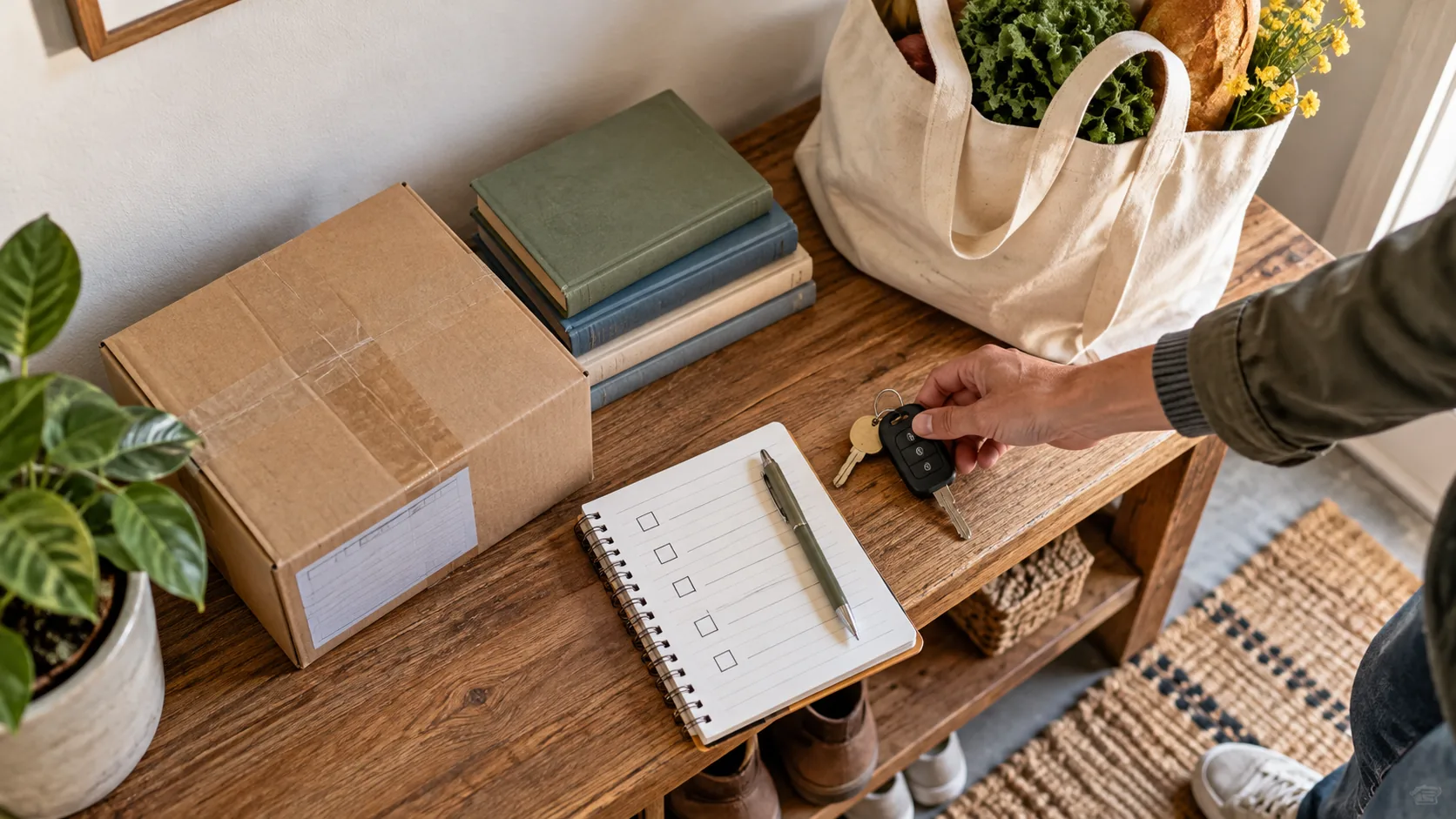
Family errands often begin as fragments: return the library books, collect a prescription, drop off a form, buy batteries, pick up dry cleaning. Each item seems small, so it lands in a message or someone’s memory. The wasted time appears later when two trips cover the same route or the person already near the store did not know what was needed.
A shared errand list app works when it helps the household turn requests into complete actions, group compatible stops, and show who owns each outcome. It should reduce trips and repeated questions without turning every outing into an optimization exercise.
Capture a complete errand, not a reminder fragment
Write the action, place, deadline, and any essential constraint. “Library” is ambiguous. “Return Maya’s books to Oak Street Library by Thursday” gives another person enough information to act. Add reference details only when they are safe and genuinely needed.
Keep errands separate from ideas. If the family has not decided whether to buy or collect something, label it as a decision rather than placing it on a route as though it were confirmed.
Group errands by the way the family already moves
Look for stops near school pickup, work, an activity, or the regular grocery route. Group by place or area, then check opening hours and deadlines from the relevant official source. A shorter route is useful only if the stop is actually available when the person arrives.
Do not delay an urgent or important errand merely to create a perfect bundle. Use route grouping for flexible tasks and give time-sensitive actions their own clear plan.
Assign the outcome, not only the drive
The errand owner may need to prepare a return, bring a form, collect a code, confirm availability, or report that the item was unavailable. Include those dependencies so the driver does not discover them at the counter.
When one person prepares and another travels, make the handoff visible. The person who packs the return should mark it ready in the agreed location; the driver should know what they are collecting and what completion looks like.
Keep groceries and errands connected but distinct
A grocery list is usually organized around items and a shopping workflow. An errand list includes outcomes across different places. Link the two when a route includes a store, but do not copy every grocery item into a general task list.
If an errand changes a meal or household plan, update the connected source. An unavailable dinner ingredient may need a substitution decision. A delayed pickup may affect the evening calendar. Completion is not useful if the rest of the plan remains stale.
Review the list before it becomes a backlog
Once or twice a week, delete canceled ideas, confirm unresolved deadlines, and group the next practical route. If an errand keeps rolling forward, decide whether it matters, needs a different owner, or should be removed.
Limit the active list to actions the family can realistically complete. A trusted short list creates more value than a complete archive of every possible household purchase and return.
How Domio can coordinate family errands
Domio can keep errands as assigned family to-dos beside the calendar, routines, meals, and grocery needs that affect them. That allows the household to see an errand in the context of who will already be out, when it is due, and what changes after it is completed.
Exact location-aware reminders or route optimization should be verified against the current product before relying on them. The dependable workflow is simpler: clear task, clear place, clear owner, clear deadline, and one shared completion state.
Continue planning with Domio
Turn the ideas in this guide into one shared plan for your family.
Try DomioDomio family to-dos
Assign errands and make the completion state visible to the household.
family command center
See errands beside the calendar, meals, routines, and other household work.
shared family todo list
Build clear ownership for chores, errands, and recurring responsibilities.
shared grocery list
Keep item-level shopping separate while coordinating the overall route.
Frequently asked questions
What should go on a shared family errand list?
Add confirmed actions that require a place or handoff, with the owner, deadline, and essential constraint. Keep tentative purchase ideas separate until the family decides to act.
How should families organize errands?
Group flexible errands by area or an existing trip, while giving urgent tasks their own plan. Confirm opening hours, availability, and required materials with the relevant source.
Is an errand list different from a grocery list?
Yes. A grocery list organizes items for shopping, while an errand list organizes outcomes across places. Link them when useful, but avoid maintaining duplicate item lists.