
Parent-Teacher Conference Planner: Questions and Follow-Up
Use a parent-teacher conference planner to confirm the meeting, prioritize questions, arrange household coverage, and record agreed next steps.
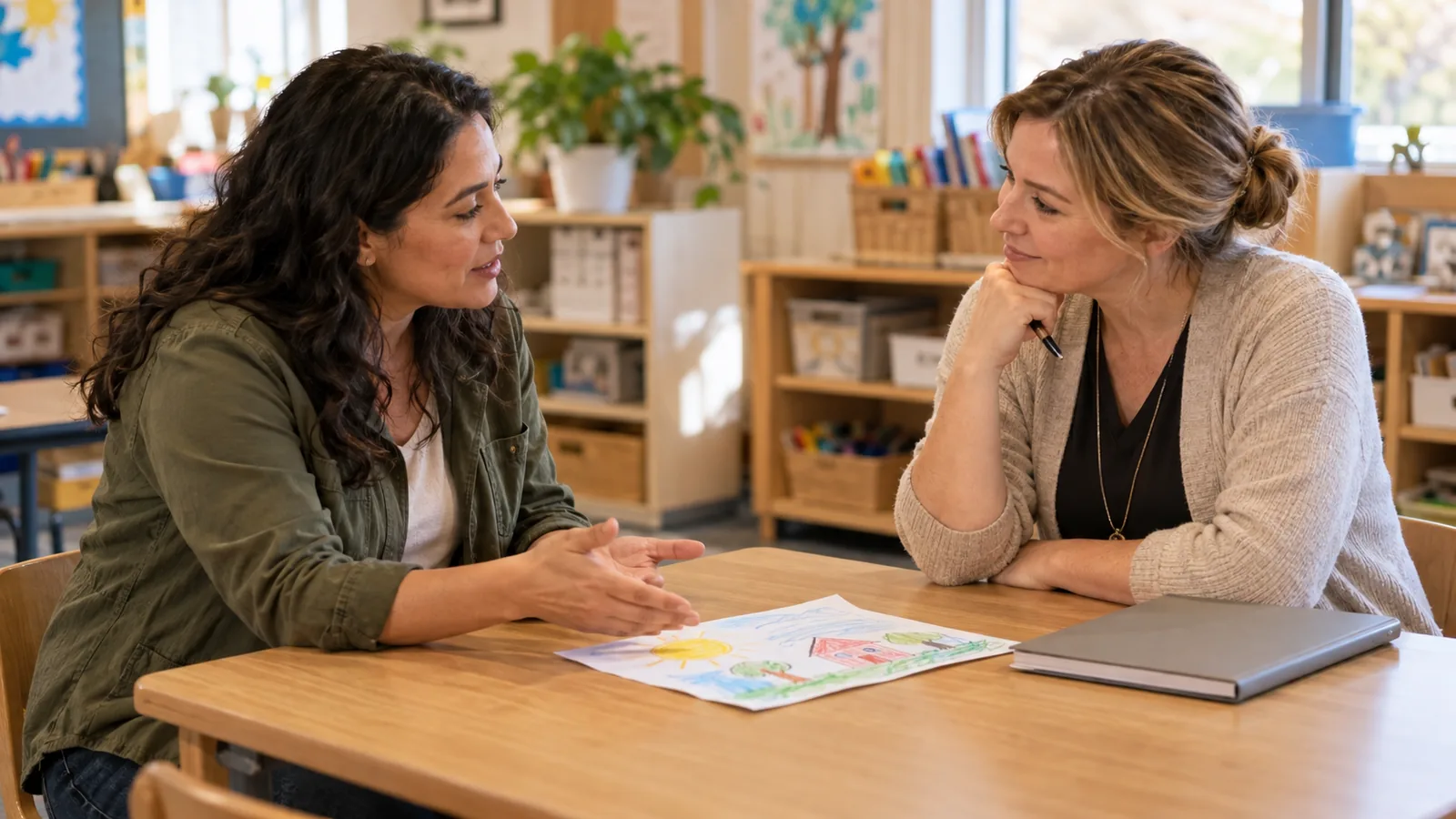
A parent-teacher conference planner brings together the confirmed appointment, a few focused questions, and a record of what happens afterward. Start with the school’s instructions, ask your child what they would like discussed, and leave space to record each agreed action with an owner and a review point.
The plan below organizes a conversation. The teacher and school remain the source for classroom information, learning expectations, and the support available to your child.
Confirm the appointment and the household coverage
Record the teacher, date, meeting length, location or call link, and the school’s instructions about who attends. Check whether you need to request interpretation or another meeting arrangement in advance. Use the school’s booking process to confirm the time.
Then check the rest of the afternoon. Who handles pickup, younger siblings, and travel? If two adults attend separate conferences, leave realistic transition time between rooms or calls. A meeting is not fully arranged while its childcare coverage is still an assumption.
Choose questions from specific observations
Review the recent information the school has already shared and ask your child what feels easy or difficult. Pick two or three questions you most want answered. “What does a successful first draft look like?” gives the teacher a more concrete starting point than “How is everything?”
Bring a brief example from home when it helps explain a question. Describe what you observed without deciding the cause in advance. For example: starting the weekly writing task has been difficult on two recent evenings; ask how the child approaches the same work in class.
Use a one-page conference record
Copy this template: Child and teacher; confirmed time; child’s question; parent’s main questions; examples to discuss; strengths mentioned; agreed action; owner; check-in date; preferred communication channel. Leave room to revise your initial assumptions during the conversation.
An example action might be: parent asks the child to explain the assignment instructions before starting; teacher shares the usual classroom prompt; both review how it is working at the agreed check-in. Record the agreement actually reached rather than arriving with a finished plan for everyone else.
End by confirming the next step
Before the meeting ends, repeat the action, who will take it, and how you will know whether to reconnect. If a concern needs more time, ask how to arrange a further conversation. A short conference does not have to settle every question.
Keep the detailed meeting notes in an appropriate private place. The household calendar may only need the next meeting or a reminder to send the agreed message. Share sensitive school information only with the people involved in supporting that child.
Make follow-through small enough to complete
Tell your child what you learned in language they can understand, including strengths and any plan that involves them. Confirm what they will try and what adults will handle. Avoid turning the discussion into a long list of corrections at home.
Use a family calendar or Domio task for the logistical next step, such as confirming a follow-up time. Keep the school’s own instructions available. At the next check-in, bring a short observation about the agreed action rather than rebuilding the whole conversation from memory.
Continue planning with Domio
Turn the ideas in this guide into one shared plan for your family.
Try DomioFrequently asked questions
What should I bring to a parent-teacher conference?
Bring the school’s requested materials, a few focused questions, and brief examples that explain your concerns. Ask your child what they would like discussed before finalizing your list.
How many questions should I prepare?
Prioritize the questions that fit the confirmed meeting time. Keep other questions available and ask how to follow up if the conversation needs more time.
What should I record after the conference?
Write the agreed action, owner, communication channel, and check-in date. Keep detailed educational information separate from broadly shared household calendar entries.