Moving Checklist for Families: An 8-Week Plan That Shares the Work
Use an eight-week moving checklist for families to coordinate packing, school changes, utilities, meals, children, and moving day.
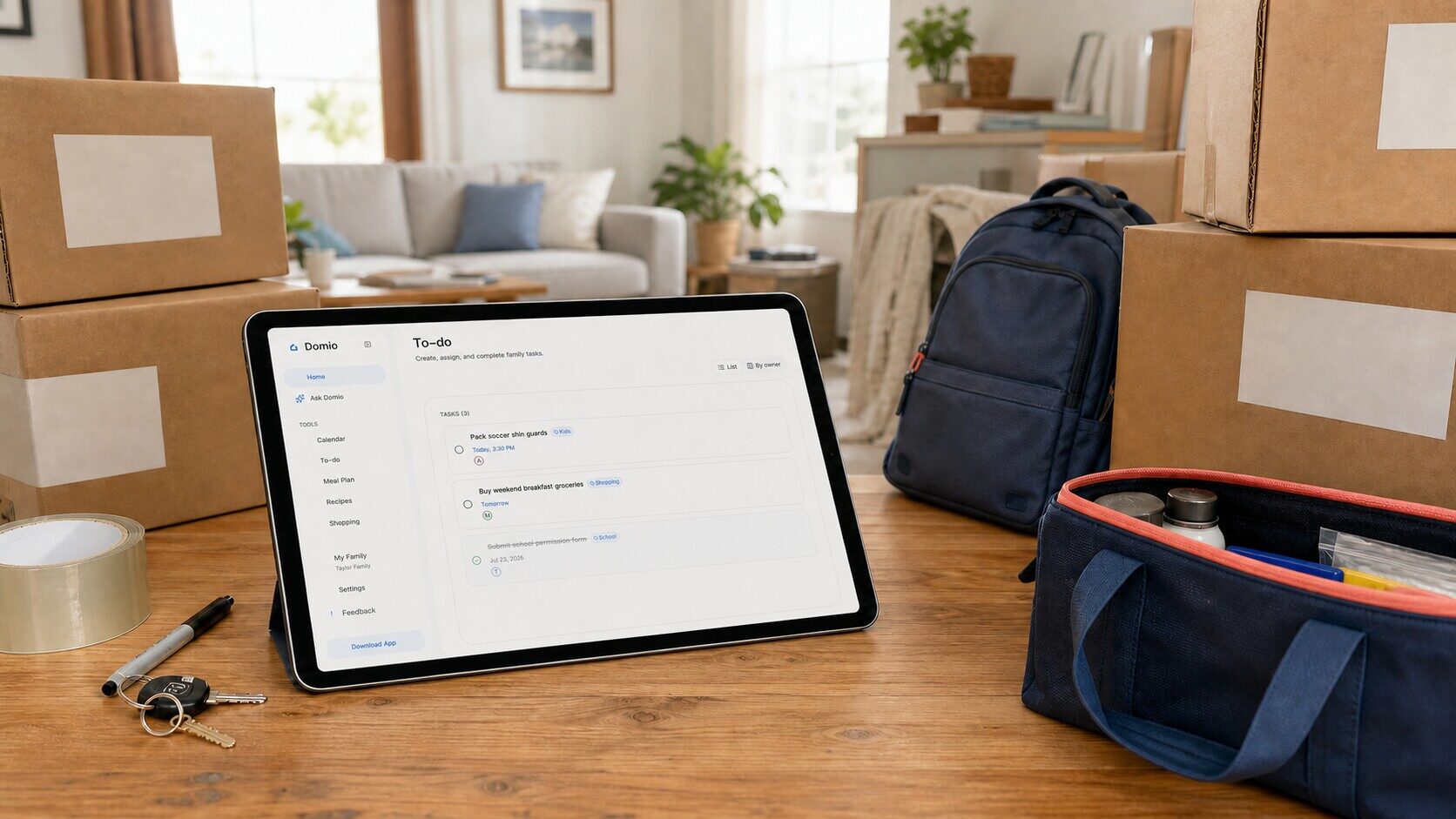
A family move is not one project. It is a deadline, hundreds of household tasks, school and care transitions, ordinary workdays, meals that still need to happen, and children who may have strong feelings about the change.
A moving checklist for families works best when it assigns complete areas of responsibility and protects normal family life during the busiest weeks. The goal is not a longer list. It is a timeline that shows what must happen, who owns it, and what can wait.
Eight weeks out: build the moving timeline
Start with the fixed date, access times, work constraints, school days, childcare, and any travel between homes. Work backward to create weekly checkpoints for decisions, bookings, packing, address changes, cleaning, and handoffs.
Keep uncertain dates visibly tentative. A quote request is not a booked mover, and a school inquiry is not a completed transfer. Separating decisions from confirmed commitments prevents the family from treating hope as a plan.
Six weeks out: organize family transitions
List the school, childcare, activity, transportation, and appointment changes each family member needs. Record official deadlines and contact the relevant organizations directly for their current requirements.
Children also need a transition plan: when they will tell friends, which familiar items stay available, and what the first week in the new home may look like. Those steps belong beside the logistics rather than at the bottom of the packing list.
Four weeks out: assign workstreams, not errands
Divide ownership by outcome. One adult might own utilities and address changes while another owns mover coordination and supply purchases. Packing can be divided by room, person, or category.
Age-appropriate tasks can help children participate, but an adult should still own the result. “Pack five books into this box” is clearer than asking a child to manage an entire bedroom.
Two weeks out: protect meals and daily routines
Plan simple meals that use freezer and pantry items, then reduce grocery shopping to essentials. Keep school bags, work equipment, medications, chargers, pet supplies, and basic kitchen items out of sealed boxes.
Create one essentials plan for the final night and first two days. It should cover clothing, toiletries, food, bedding, documents, cleaning supplies, and what each child needs to settle.
Moving week: run one shared command list
Use a short moving-day list with owners, timing, contact details, keys, meter readings, final checks, child or pet supervision, and the first actions at the new home. Keep it separate from tasks that can happen later.
Review that list at the start and end of each moving day. Completed work should disappear from the urgent view, while blocked items should show the decision or person needed next.
How Domio supports the move without becoming a moving app
Domio can turn a plain-language request into a family plan, then keep the moving date, assigned tasks, simple meals, grocery needs, and ordinary commitments visible together. That is useful when the move has to coexist with school, work, care, and dinner.
Specialist quotes, contracts, inventories, and local requirements should stay with the relevant provider or authority. Domio’s role is the household coordination layer: helping the family see what is next, who owns it, and which everyday plans need to adjust.
Continue planning with Domio
Turn the ideas in this guide into one shared plan for your family.
Try DomioFrequently asked questions
When should a family start a moving checklist?
Eight weeks before the move is a useful starting point when possible. Families with school transfers, long-distance travel, or complex care arrangements may need more time.
How should families divide moving responsibilities?
Assign complete workstreams such as utilities, movers, school transitions, or packing areas. Clear ownership reduces repeated delegation and missed follow-up.
What should stay unpacked until moving day?
Keep essential documents, medications, chargers, work and school items, basic food, toiletries, bedding, cleaning supplies, and child or pet necessities accessible.