Meal Planning for Picky Eaters: Build Flexible Dinners Without Making Two Meals
Use a flexible meal-planning system for picky eaters with familiar components, low-pressure variety, and realistic busy-night backups.
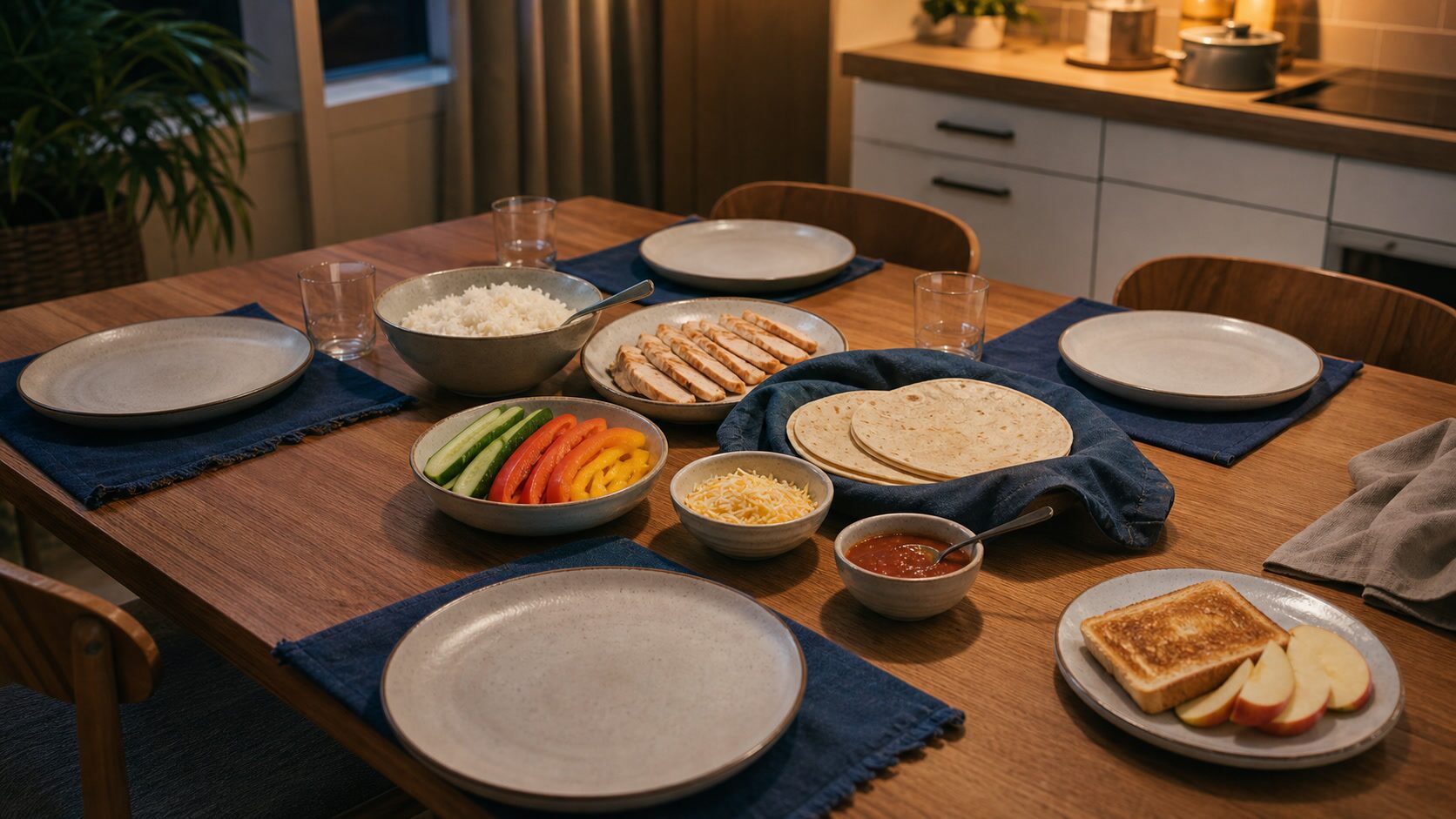
Meal planning becomes exhausting when one child eats the pasta but not the sauce, another is tired of the usual dinner, and the adults do not want to cook separate meals. The problem is not a lack of recipes. It is building a plan that can flex without creating a restaurant at home.
Meal planning for picky eaters works best when families plan familiar components, small opportunities for variety, and reliable backups. The goal is a dinner structure the household can repeat, not a perfect menu everyone loves equally.
Start with meals the family already accepts
List eight to twelve dinners that work reasonably well. They do not need unanimous enthusiasm. They only need a familiar base that can be served without a new negotiation every time.
Use this list as the planning foundation. New ideas can be added gradually, but the weekly plan should not depend on five untested recipes succeeding during busy evenings.
Plan components instead of separate meals
Meals such as tacos, rice bowls, pasta, baked potatoes, sandwiches, and snack plates let family members choose among shared components. One person can skip a topping without requiring a second dinner.
Include at least one familiar component when possible, then serve the rest of the meal without pressure. This is a planning framework, not medical or feeding therapy; families with nutrition, allergy, or feeding concerns should follow professional guidance.
Match variety to the least stressful nights
Try a new recipe or ingredient on a night with enough time and emotional margin. A rushed activity night is rarely the best moment to test a dinner that may need substitutions or extra explanation.
Use the calendar to protect busy nights with familiar meals, leftovers, planned takeout, or food that can be assembled quickly. A realistic plan is more useful than an ambitious one the family abandons by Wednesday.
Keep a neutral backup available
A backup should be simple, known, and not more exciting than the planned meal. Examples might include toast with a familiar protein, yogurt and fruit, or another option that fits the family’s needs.
Decide the backup before dinner rather than during a conflict. The plan should reduce pressure for both parents and children, not become a reward for rejecting the meal.
Turn the flexible menu into a grocery list
Shop for shared building blocks that can work across meals: tortillas, rice, pasta, familiar vegetables, proteins, fruit, dairy or alternatives, and a few reliable pantry items. Reusing components reduces waste and makes substitutions easier.
Check quantities against the full week rather than one recipe at a time. That keeps familiar backups available while reducing duplicate purchases across flexible meals.
How Domio adapts meals to the real week
Domio brings the family calendar, food preferences, meal plan, recipes, and grocery list into one workflow. That lets the plan reflect which nights are crowded and which nights have enough time for a new component.
If practice moves later or a parent becomes unavailable, Domio can help the family choose a simpler meal and keep the grocery plan connected. The goal is not endless recipe generation; it is fewer dinner decisions when the week changes.
Continue planning with Domio
Turn the ideas in this guide into one shared plan for your family.
Try DomioFrequently asked questions
How do you meal plan when family members like different foods?
Plan a familiar base with optional components, such as tacos, bowls, pasta, or sandwiches. People can make small choices without requiring entirely separate meals.
How many new meals should a family try each week?
For a busy family with selective eaters, one new meal or component may be enough. Put it on a lower-pressure night and keep the rest of the week familiar.
Is meal planning advice a replacement for feeding or medical guidance?
No. Families managing allergies, nutritional concerns, sensory needs, or significant feeding difficulties should use guidance from a qualified professional.