
Meal Planning App for Families: How to Plan Around Real Schedules
Find out how a meal planning app for families can help plan dinners around school, work, activities, groceries, and routines.
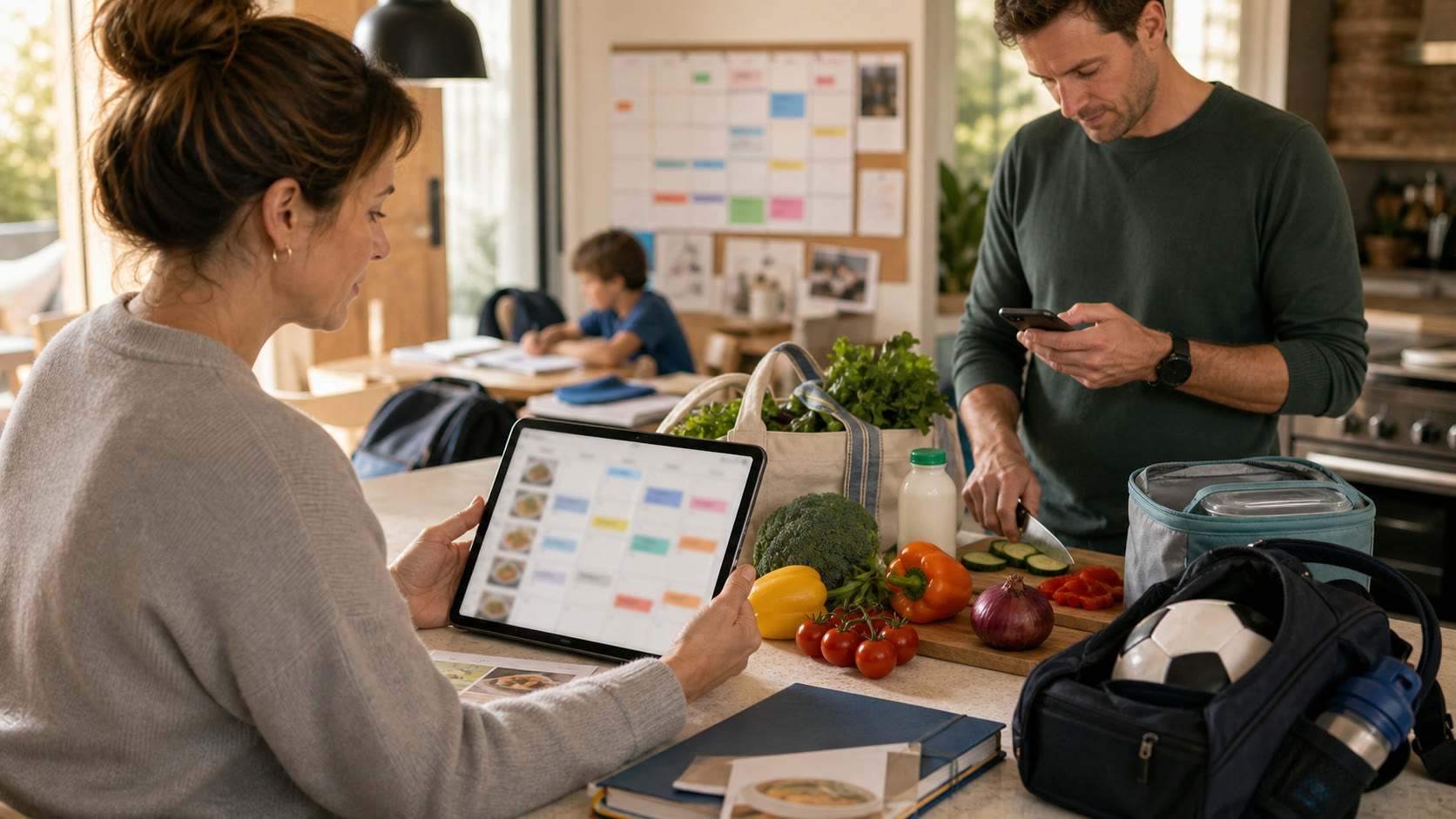
Meal planning advice often assumes every week looks the same. Families know better.
A meal planning app for families should start with the real schedule, because dinner depends on school, work, activities, groceries, and who is actually home to cook.
Family meal planning starts with the calendar
Dinner is easier to plan when the household can see which nights need something fast, which nights allow cooking, and which nights are better for leftovers or takeout.
The plan should match the week, not an ideal version of the week.
What makes meal planning hard for families
Parents are not just choosing recipes. They are balancing picky eaters, budget, school lunches, sports nights, grocery trips, pantry staples, cleanup, and available energy.
When that decision lands at 5 p.m., it feels heavy because the family has already spent the day making decisions.
Features a family meal planning app should include
Look for a weekly meal view, shared access for adults, grocery list connections, and simple prep notes. Families need labels like leftovers, quick dinner, eat before practice, or prep Sunday.
A family meal planner should reduce decisions, not become a hobby that requires perfect maintenance.
Connecting meals to groceries and tasks
A dinner plan without a shopping list still creates work later. A grocery list without a meal plan can lead to random ingredients and another round of decisions.
The best household system connects the two and makes prep tasks visible before the week starts.
Match meal effort to the shape of each night
Label evenings before choosing recipes. A late practice night may need a 15-minute meal, while a quiet Sunday can support batch cooking. A night with two different arrival times may work better with food that reheats well.
This schedule-first approach removes unrealistic choices early. The family is deciding what kind of dinner can work before debating individual recipes.
Plan leftovers and backup meals on purpose
Leftovers are most useful when the plan names when they will be eaten. Pair a larger meal with the next compressed evening, and reserve one pantry or freezer option for the schedule change nobody can predict.
A backup is not a failed meal plan. It is part of a realistic plan that protects the household from an extra shopping trip or a late decision.
Test a meal planner before moving every recipe
Enter three dinners, one leftover night, and one backup meal. Generate or build the grocery list, let another adult add an item, and change one dinner after shopping.
The useful app is the one that keeps the meal, ingredient list, and family schedule understandable after that change. A beautiful recipe library is secondary if the weekly plan is hard to maintain.
Continue planning with Domio
Turn the ideas in this guide into one shared plan for your family.
Try DomioFrequently asked questions
How many dinners should a family plan at once?
Start with three to five dinners and leave room for leftovers, schedule changes, and a backup meal. A flexible plan is easier to maintain than seven rigid recipes.
Should meal planning happen before grocery shopping?
Yes. Choosing the shape of the week and the main meals first makes the grocery list more specific and reduces duplicate or unused ingredients.
What should a meal planning app do when plans change?
It should make it easy to move or replace a meal while keeping the shopping list and preparation notes understandable to everyone involved.
Can Domio connect meal planning with the family calendar?
Domio is designed to keep meals alongside schedule constraints, groceries, tasks, and reminders so families can plan dinner around the week they actually have.