
Family Organizer App: What Busy Households Should Look For
See what to look for in a family organizer app, from calendars and tasks to meals, groceries, reminders, and shared routines.
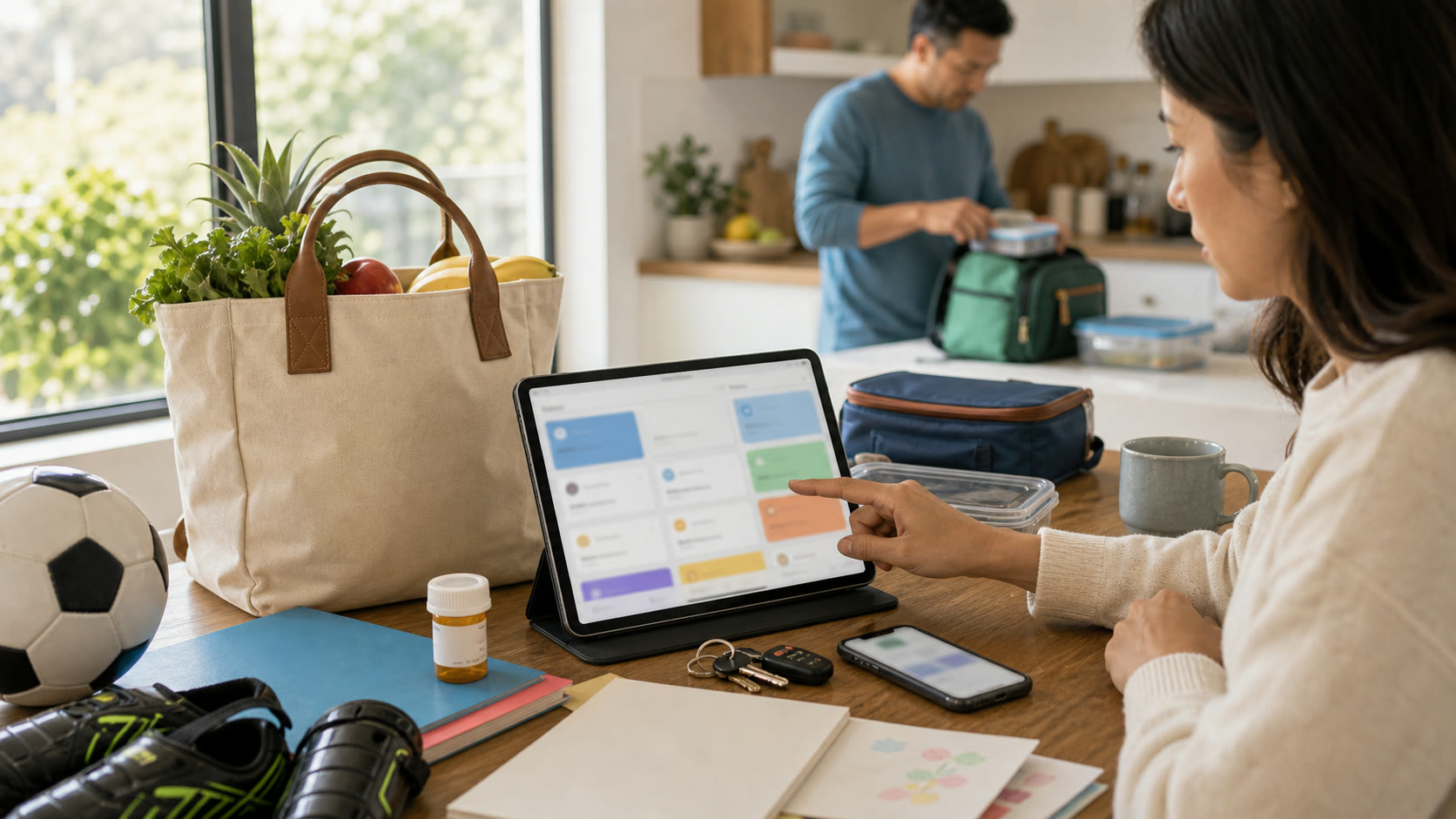
A family organizer app should make home life easier to run, not give parents another dashboard to maintain.
The right app helps the household see what is coming, who is doing what, and what needs to be prepared before the day becomes urgent.
A family organizer app should reduce coordination work
Families often start looking for an organizer when the current system becomes too scattered. The calendar is in one app, grocery needs are in texts, chores are discussed repeatedly, and school reminders live in email.
The problem is not a lack of effort. It is the absence of one shared place where household information can become a plan.
Core features to look for
Start with a shared calendar for school events, activities, appointments, work conflicts, travel, and recurring commitments. Then look for family tasks that can assign owners without making home feel like work.
Meal planning, grocery lists, reminders, and routines also matter because they are part of the same household system. A late practice night affects dinner, shopping, laundry, and bedtime.
Signals an app will work for your household
A good organizer is understandable to the whole household. If only one parent can maintain it, the mental load has simply moved into a better-looking tool.
Look for simple shared visibility, clear ownership, recurring routines, and enough context for another adult or caregiver to step in without asking for a full briefing.
How to start without overbuilding the system
Add this week's calendar, three recurring household tasks, one simple meal plan, and a shared grocery list. Review it together once a week.
A family organizer app succeeds when it becomes part of the rhythm of the household, not another thing one person has to remember.
Check participation before checking feature count
A long feature list does not help if the other adults cannot find the plan or children cannot understand what applies to them. Ask who can add information, who can edit it, and whether a caregiver can see a useful subset without receiving every household detail.
The setup should also work during a busy day. If adding a changed pickup or a grocery item requires a training session, the household will return to texts and memory when pressure rises.
Use a seven-day household trial
Test the organizer with a normal school week rather than a clean demo. Add two working-parent constraints, a recurring chore, three dinners, a shopping need, and one event that changes at the last minute.
At the end of the week, count the repeated questions the system prevented. Also note which information still had to be copied between tools; those gaps reveal whether the app is organizing the household or only storing separate lists.
Know when separate specialist tools still make sense
A family organizer does not have to replace every specialist service. A school portal may remain the official source for grades, and a medical portal should remain the source for health records.
The organizer should capture the household action created by those systems: the conference time, the form deadline, the ride, or the reminder. This keeps sensitive or specialized work in the right place while making the family plan complete.
Continue planning with Domio
Turn the ideas in this guide into one shared plan for your family.
Try DomioFrequently asked questions
What is the most important feature in a family organizer app?
Shared clarity is more important than the longest feature list. Everyone involved should be able to see what is happening, what they own, and what changed without depending on one person for an explanation.
How long should we test a family organizer?
A seven-day trial is enough to expose the main workflow gaps if it includes school, work, tasks, meals, groceries, and at least one last-minute schedule change.
Does a family organizer need to replace every app?
No. Keep specialist systems where they are authoritative, then bring the resulting household actions and deadlines into the shared family plan.
How does Domio organize more than a calendar?
Domio connects calendar events with tasks, meals, groceries, reminders, routines, and handoffs so the household can act on the schedule instead of only viewing it.